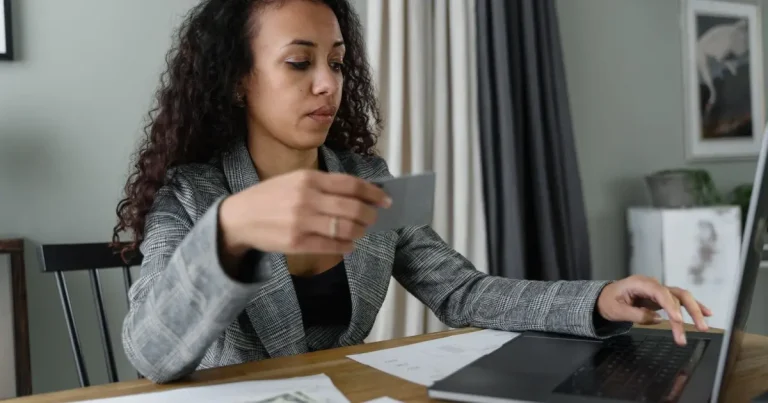
Take two hypothetical parents. Dana has two kids, a minivan with 140,000 miles on it and $300 in savings. When the transmission goes on a Tuesday, she puts the $2,800 repair on the card she already uses for groceries, which now sits near its limit. Eight months later she is still paying it down at a rate north of 20%, and every month the grocery charges land on top of the old repair.
Marcus has the same family size and the same aging van, but he keeps $2,000 in a savings account and one card in a drawer with a zero balance. The same repair drains most of his savings, and he charges the last $800 to the drawer card. He refills savings first, pays the card off in three months, and puts it back in the drawer.
Both used credit in an emergency. Only one had a plan. The difference is not whether a card is involved, but what job it is given and what sits in front of it.
Why a card makes a poor first line of defense
A credit card feels like an emergency fund because the money is there instantly. It is borrowed money, though, and the cost shows up later. Average card rates for accounts that carry a balance have run above 20% in recent Federal Reserve data, so a $3,000 balance paid off slowly can cost several hundred dollars in interest before it is gone.
There are three other problems families run into:
- The limit can shrink when you need it. Issuers can lower credit limits, and they sometimes do during recessions or after a missed payment, which is exactly when a household is most likely to be under strain.
- Utilization hits your score. A large balance relative to your limit pulls your credit score down. If the emergency is a job loss and you later need to rent an apartment or refinance, that lower score follows you.
- Some costs cannot go on a card. Rent, many landlords, some utilities and child care providers either refuse cards or charge a fee. A cash cushion covers those; a card often cannot.
Where a backup card does earn its place
None of that means a card has no role. For a family still building savings, a card with no balance and a decent limit can act as a bridge: it covers the gap between what the emergency costs and what the savings account holds. That is a reasonable use, as long as the card stays the second layer and not the first.
A backup card also helps with timing. If the furnace fails on a Saturday and your savings sit at a bank that takes two days to transfer, charging the repair and paying the card from savings when the transfer clears costs nothing in interest, because you pay before the statement balance is due.
Some parents also like the purchase protections. Paying a repair shop or emergency plumber by card gives you a dispute right under the Fair Credit Billing Act if the work is never done or the charge is wrong, which a debit card or cash payment does not offer in the same way. The CFPB explains the basics of disputing a credit card charge.
Comparing the two side by side
| Feature | Cash emergency fund | Dedicated backup card |
|---|---|---|
| Cost to use | Lost interest on savings only | Interest if not repaid by the due date |
| Availability | Can lag a day or two for transfers | Instant, anywhere cards are accepted |
| Can it be taken away? | No | Yes, the issuer can cut the limit or close it |
| Covers rent and child care | Yes | Often not, or with a fee |
| Effect on credit score | None | Higher balance lowers the score until paid |
House rules for the drawer card
If your family keeps a card for emergencies, write down when it may be used. Couples who agree on this in a calm month avoid arguing about it in a bad one. A workable set of rules looks like this:
- It must be urgent, necessary and unexpected. A car repair needed to get to work qualifies. A vacation deal, a holiday shortfall or a birthday party does not. Predictable costs like back-to-school supplies belong in the monthly budget.
- Savings go first. The card covers only what the emergency fund cannot.
- Both adults are told within a day. No surprise balances.
- There is a payoff date. Before the charge goes through, pick the month it will be paid off and work backward to a monthly amount.
- The card is not used for anything else. A clean card with nothing on it makes the emergency balance visible and easy to track.
Keep the card somewhere that takes a little effort to reach. Remove it from phone wallets and shopping sites so it cannot become the default card by accident. If you have teenagers, make sure they are not authorized users on this specific account.
Building the cash layer while the card waits
The longer-term goal is to shrink the card’s role. A starter target many families use is one month of essential expenses, then working toward three. Even small automatic transfers on payday add up, and every dollar there is a dollar the card does not have to cover.
If you already carry balances on other cards, that changes the order. Paying down existing high-rate debt while keeping a small cash buffer is often more useful than letting savings grow while interest compounds elsewhere. Our guide to paying off household debt together walks through the two common methods.
For big home failures, a card is rarely the cheapest option anyway. If the roof or furnace is the emergency, see financing urgent home repairs for options that can carry lower rates than revolving credit.
Common questions
Should the emergency card have a high limit?
A limit large enough to cover your most likely emergency, such as a major car repair or an urgent care bill, is enough. A very high limit is not necessary and can tempt a household into larger charges than the situation requires.
Will the issuer close a card I never use?
It can. Issuers sometimes close accounts after a long stretch of inactivity, which also removes that available credit from your score calculation. Putting one small recurring charge on it, such as a streaming subscription set to autopay in full, keeps it active without blurring its purpose much.
Is a card with a 0% intro APR a better backup?
It can soften the cost of a big emergency if the promotional period is still running when you need it. Those offers expire, though, usually within a year or two of opening, so a card opened today may have a standard rate by the time something breaks.
What about a cash advance in an emergency?
Cash advances usually carry a separate fee, a higher rate than purchases and no grace period, so interest starts the day you take the cash. They are among the most expensive ways to borrow from a card.
If you only remember one thing
A credit card can back up your family’s emergency fund, but it should not replace it. Keep the card empty, give it written rules, use it only for what savings cannot cover, and pay it off on a schedule you set before you swipe.