
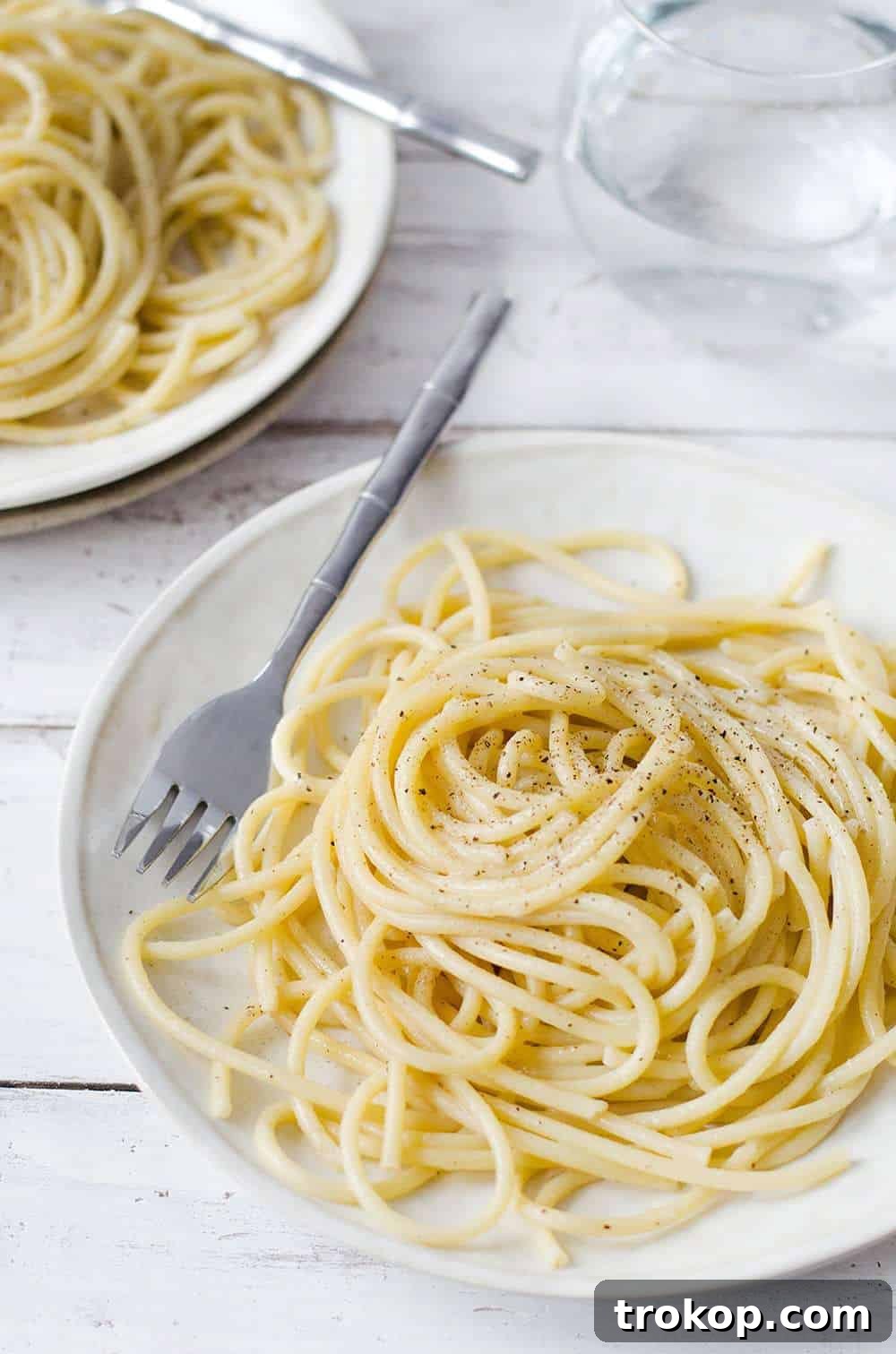
Step into the heart of Italian culinary tradition with our exquisite Cacio e Pepe recipe. This beloved pasta dish, a timeless Roman classic, masterfully combines the pungent richness of Pecorino Romano cheese with the bold warmth of freshly ground black pepper. It’s a symphony of simple yet profound flavors that creates a truly unforgettable dinner experience, captivating both children and adults alike with its creamy texture and zesty kick.
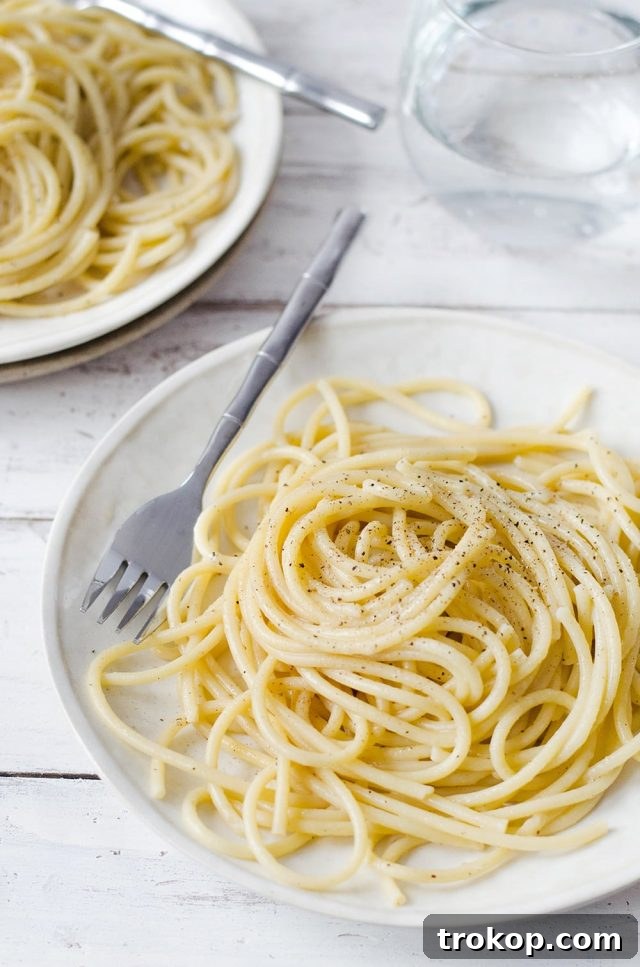
Literally translating to “cheese and pepper,” Cacio e Pepe is the epitome of minimalist Italian cooking. This elegant dish requires a mere five ingredients and can be prepared in under 15 minutes, making it an ideal choice for a sophisticated yet effortless date night in, or a quick, satisfying weeknight meal. Forget spending hours in the kitchen when you can whip up this culinary masterpiece with such ease and speed.
The beauty of Cacio e Pepe lies in its deceptively simple preparation and profound depth of flavor. It’s a dish that proves that sometimes, the fewest ingredients yield the most spectacular results. If you’re looking to impress without the stress, this pasta should be at the top of your list. The allure of finely grated cheese, perfectly al dente pasta, and aromatic pepper is universally appealing. Even those who consider themselves kitchen-averse will find joy and success with this recipe, as it’s practically foolproof and guaranteed to garner rave reviews from anyone lucky enough to taste it. We’ve served this dish to countless dinner guests over the years, and it consistently receives enthusiastic compliments – now, even our kids can’t get enough of it!
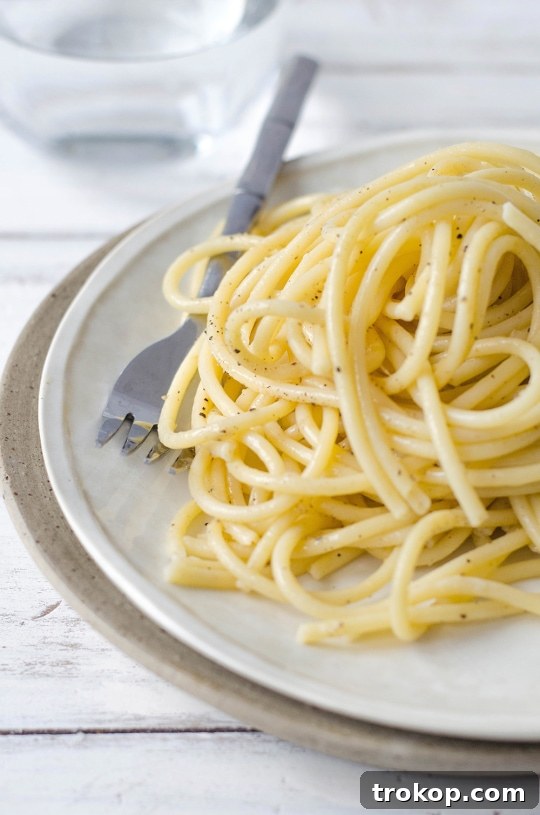
Table of Contents
Toggle
What is Cacio e Pepe?
Cacio e Pepe is a revered Roman pasta dish, celebrated for its exquisite simplicity and intense flavor. At its core, this traditional Italian delight consists of spaghetti, bucatini, or other suitable pasta varieties, harmoniously tossed with a luscious sauce crafted from finely grated Pecorino Romano cheese, a generous amount of freshly ground black pepper, and the crucial ingredient: starchy pasta cooking water. Unlike cream-based sauces, Cacio e Pepe achieves its signature velvety texture through a delicate emulsion, transforming these humble components into a culinary marvel.
The magic of Cacio e Pepe truly unfolds through the alchemy of its preparation. It begins with bringing a large pot of water to a rolling boil, seasoned generously with salt to infuse the pasta with flavor from within. The pasta is then cooked until it reaches the perfect al dente texture. The secret to the sauce lies in reserving a portion of this starchy pasta water. This liquid, enriched with starch released from the pasta, becomes the emulsifying agent, binding the grated cheese and butter into a smooth, luxurious sauce that lovingly coats each strand of pasta. When combined with the butter and cheese in a skillet over medium heat, the starch from the pasta water helps to create a glossy, clingy sauce, turning a basic meal into something truly extraordinary. It’s a clever kitchen trick that showcases the brilliance of Italian cooking.
The Essential Ingredients for Cacio e Pepe
While Cacio e Pepe prides itself on its simplicity, the quality of its few ingredients is paramount to achieving an authentic and truly delicious dish. The magic truly lies in selecting the best possible cheese and pasta, alongside a few other key components. Our perfected version relies on these elements:
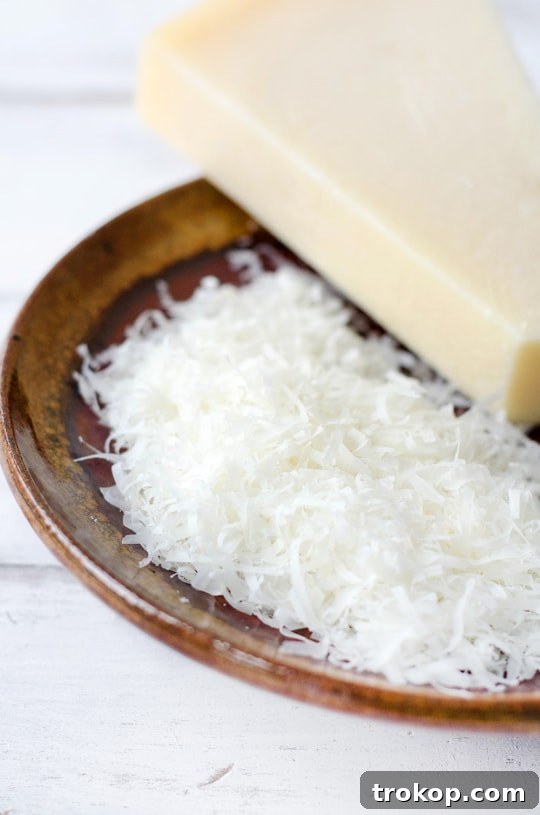
- Freshly Grated Pecorino Romano Cheese: This is the star of the show. Insist on high-quality Pecorino Romano, an aged sheep’s milk cheese, for its signature sharp, salty, and tangy flavor profile. Its intensity is a crucial component that defines Cacio e Pepe. For a slightly milder and nuttier flavor, you can substitute with Parmigiano Reggiano cheese or Grana Padano cheese. Always grate the cheese fresh from a block for the best texture and flavor; pre-grated cheeses often contain anti-caking agents that can hinder the smooth emulsification of your sauce.
- High-Quality Spaghetti Noodles: While spaghetti is a popular choice, traditional Roman Cacio e Pepe often uses bucatini (a thicker, hollow spaghetti-like pasta) or tonnarelli (a square-cut pasta similar to spaghetti). Fettuccine pasta can also work. The key is to select a pasta that has a good surface area or texture to effectively capture and hold the creamy sauce. Quality pasta, made from durum wheat, will also release more starch into the cooking water, which is vital for the emulsion.
- Unsalted Butter: Butter contributes richness and helps facilitate the emulsification process, providing a smooth base for the cheese and pepper. While salted butter can be used, unsalted butter gives you more control over the overall saltiness of the dish, allowing the Pecorino Romano’s natural saltiness to shine without overpowering.
- Freshly Ground Black Pepper: This isn’t just a seasoning; it’s a co-star. Use a pepper mill to coarsely grind high-quality black peppercorns (like Tellicherry or Malabar) just before using. The fresh grind releases intense aromatic oils and a vibrant, robust flavor that pre-ground pepper simply cannot match. Toasting the freshly ground pepper in butter is crucial for unlocking its full potential.
- Salt: Essential for seasoning the pasta water. Remember, the pasta absorbs salt as it cooks, seasoning it from the inside out. Aim for water that tastes “like the sea” – generously salted. This pre-seasoning reduces the need for additional salt later, letting the cheese and pepper flavors dominate. Some adventurous recipes even experiment with black sea salt for an added mineral complexity.
Mastering Cacio e Pepe: Step-by-Step Instructions
Creating the perfect Cacio e Pepe is an art of timing and technique, turning simple ingredients into a gourmet experience. Follow these detailed steps to achieve a creamy, luscious sauce that clings beautifully to every strand of pasta:
1 — Prepare the Pasta: Boil and Season Generously
Begin by filling a large pot with water, ensuring enough volume for the pasta to swim freely. Bring this water to a vigorous boil. This is a critical step: generously salt the boiling water until it tastes distinctly salty, akin to seawater. This ensures your spaghetti (or chosen pasta) is seasoned from the inside out as it cooks, building the foundational flavor of your dish. Add your spaghetti, bucatini, or fettuccine and cook according to the package directions, ensuring it remains al dente. This means it should be firm to the bite, not mushy.
2 — Toast the Pepper: Infuse Aromatics
While your pasta is cooking, heat a large, heavy-bottomed skillet over medium-low heat. Add the unsalted butter and allow it to melt completely, but do not let it brown. Once melted, stir in the freshly cracked black pepper. Reduce the heat to low and gently toast the pepper for 1-2 minutes, stirring continuously. This crucial step awakens the pepper’s aromatic qualities, releasing its oils and intensifying its flavor without burning it. You’ll notice a distinct, fragrant aroma filling your kitchen.
3 — Reserve the Starchy Pasta Water: The Secret to Creaminess
Just before you drain your pasta, carefully scoop out about 1/2 to 1 cup of the starchy pasta cooking water. This clouding liquid is liquid gold for Cacio e Pepe. The starch particles suspended in the water are essential for emulsifying the cheese and butter into a smooth, silky sauce that adheres perfectly to the noodles. Keep this precious liquid aside; it’s the key to your sauce’s success.
4 — Combine Pasta and Pepper: A Flavorful Coating
Once the pasta is al dente, drain it immediately (do not rinse!) and transfer it directly into the skillet with the toasted butter and pepper. Pour in about ½ cup of the reserved pasta water. Using tongs, vigorously toss the pasta with the peppered butter and water. This initial toss begins to coat the noodles and distributes the peppery flavor evenly. The hot pasta will also help release more starch, further preparing the base for your sauce.
5 — Emulsify the Cheese and Finish the Sauce: The Grand Finale
With the pasta still in the skillet (over very low heat or off the heat to prevent the cheese from clumping), gradually sprinkle in the freshly grated Pecorino Romano cheese. This part requires constant, energetic tossing with your tongs. The goal is to create a creamy, emulsified sauce, not melted clumps of cheese. The heat from the pasta and the residual heat from the skillet, combined with the starchy pasta water, will help the cheese melt smoothly into a luxurious sauce. If the sauce seems too thick or dry, add more of the reserved pasta water, a tablespoon at a time, until you reach your desired creamy consistency. Continue to toss until every strand is coated in a glossy, uniform sauce. Serve immediately, garnishing with an extra sprinkle of Pecorino Romano and a fresh crack of black pepper if desired. Enjoy this simple yet sophisticated Roman delight!
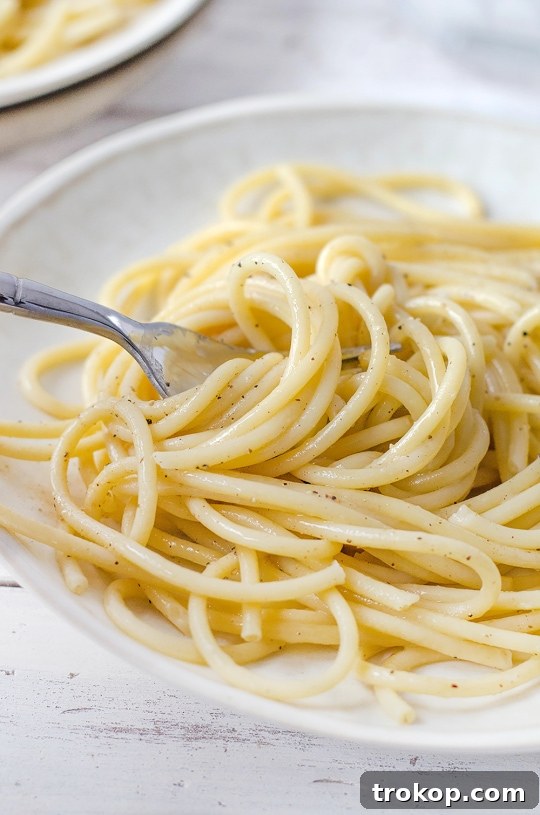
Tips for Cacio e Pepe Perfection
Achieving the legendary creaminess and bold flavor of Cacio e Pepe is simpler than you might think, but a few key tips can elevate your dish from good to extraordinary:
- Quality Ingredients are Non-Negotiable: As emphasized, the few ingredients in Cacio e Pepe mean each one plays a starring role. Invest in authentic Pecorino Romano (not pre-grated), high-quality durum wheat pasta, and whole black peppercorns that you grind fresh.
- Salt Your Pasta Water Generously: The pasta water is your first opportunity to build flavor. It should be “as salty as the sea” to properly season the noodles from within.
- Toast the Pepper Carefully: Don’t skip toasting the freshly ground pepper in butter. This step releases its essential oils and deepens its flavor, giving it a warm, fragrant kick. Watch it closely to prevent burning.
- Master the Emulsion: This is the trickiest part. The starchy pasta water is paramount. Add it gradually, little by little, while constantly tossing the pasta and cheese. The goal is a velvety sauce, not a clumpy one. If your sauce breaks (separates), try adding a tiny bit more hot pasta water and emulsifying vigorously again.
- Finely Grate Your Cheese: Use the finest side of a box grater or a microplane for your Pecorino Romano. Finer cheese melts more smoothly and is less likely to clump, contributing to a silkier sauce.
- Don’t Rinse the Pasta: Rinsing pasta removes the precious starch that helps the sauce adhere. Drain it quickly and transfer it immediately to the skillet.
- Serve Immediately: Cacio e Pepe is a dish that waits for no one. Its creamy texture is at its best moments after being tossed. Gather your diners before you finish the sauce!
What to Pair with Your Cacio e Pepe
While Cacio e Pepe is robust and satisfying enough to be a standalone main course, its rich flavors can be beautifully complemented by a few thoughtful additions or side dishes. Whether you prefer to serve it as a light main or a pasta side dish, here are some exquisite pairing options and ingredient add-ons:
- Crusty Bread and Olive Oil: A classic Italian accompaniment. Serve with a high-quality extra virgin olive oil for dipping, perhaps infused with a touch of garlic. This is perfect for soaking up any leftover sauce.
- Zero Carb Bread: For those mindful of calorie intake, a light, low-carb bread option offers a guilt-free way to enjoy the rich sauce without adding heavy carbohydrates.
- Red Wine: A full-bodied red wine beautifully balances the peppery notes and creamy cheese. A classic Chianti or Sangiovese, with its pleasant acidity and earthy undertones, is an excellent choice. Other great options include Montepulciano d’Abruzzo or a light-bodied Merlot.
- White Wine: For a lighter, more refreshing pairing, a crisp white wine like a Pinot Grigio or a dry Sauvignon Blanc can cut through the richness of the cheese and cleanse the palate.
- Minced Garlic: For an extra layer of aromatic flavor, sauté a small amount of finely minced garlic with the butter before adding the pepper. Be careful not to burn it.
- Savory Meatballs: While not traditional, serving Cacio e Pepe alongside tender Italian meatballs can transform it into a more substantial meal, adding a delightful textural contrast and meaty richness.
- Your Favorite Dinner Protein: Complement the pasta with a lean protein like grilled Italian chicken breast, pan-seared pork loin, or even a simple baked fish to create a well-rounded meal.
- Sautéed Greens: A vibrant side of sautéed greens, such as fresh spinach, Swiss chard, or broccoli rabe, adds a touch of freshness and a welcome bitterness that contrasts wonderfully with the pasta’s richness. A squeeze of lemon juice over the greens can brighten the entire plate.
- Fresh Herbs: A sprinkle of fresh parsley or chives before serving can add a burst of color and a subtle herbaceous note.
- Extra Finely Grated Cheese: Never underestimate the power of an additional sprinkle of Pecorino Romano or Parmigiano Reggiano just before serving for an extra layer of salty, cheesy goodness.
Storing and Reheating Cacio e Pepe
It’s always a delight to extend the pleasure of a wonderful meal, and Cacio e Pepe, while best enjoyed fresh, can certainly be saved for later. If you find yourself with leftovers from this delectable pasta dinner, proper storage and reheating are key to maintaining its deliciousness. You can store your Cacio e Pepe pasta in an airtight container in the refrigerator for up to three days, ensuring you have a quick and easy meal ready when cravings strike. While the cheese sauce will naturally harden when exposed to cold temperatures, it can be revived to its creamy glory with careful reheating.
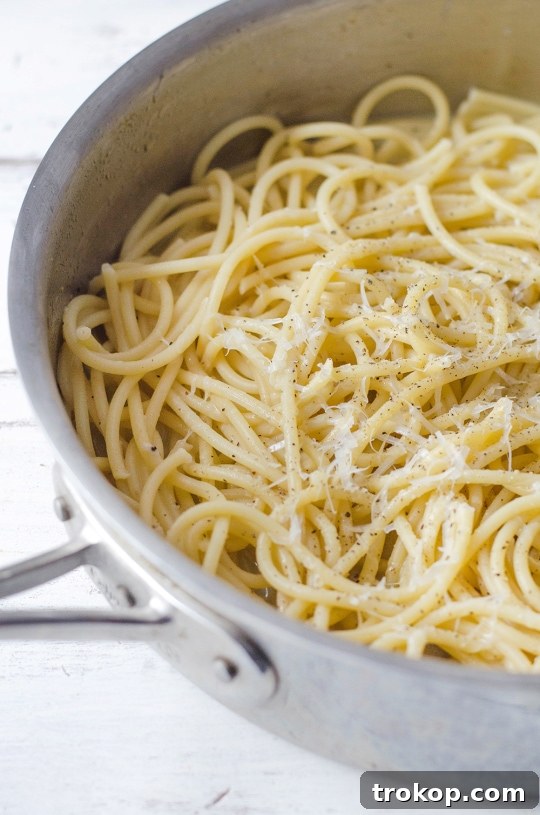
Reheating Your Delicious Leftovers
Reviving leftover Cacio e Pepe to its original creamy perfection requires a bit of care, but it’s entirely achievable. There are several tried and true methods to reheat your favorite pasta dishes, each with its own advantages. The goal is to gently warm the pasta and re-emulsify the sauce without drying out the noodles or causing the cheese to separate.
- Oven Method (Recommended for Best Quality): For a gentle and even reheat, transfer your Cacio e Pepe into a shallow, oven-safe dish. Add a splash or two of water or milk to help revive the sauce – about 1-2 tablespoons per serving. Cover the dish tightly with aluminum foil to trap moisture. Bake in a preheated oven at 350°F (175°C) for approximately 15-20 minutes, or until the pasta is thoroughly heated through and the sauce is creamy once more. Stir gently halfway through.
- Stovetop Method (Quick & Effective): This is an excellent method for smaller portions. Place the leftover pasta in a saucepan or a non-stick skillet over medium-low heat. Add a tablespoon or two of water, milk, or even a little chicken broth. Gently stir the pasta continuously, breaking up any clumps, until the sauce melts and becomes creamy again, and the pasta is hot. This method allows you to closely monitor the consistency and add more liquid as needed. Ensure it doesn’t stick to the bottom of the pan.
- Microwave Method (Fastest, but Least Preferred): While the quickest option, microwaving can sometimes lead to uneven heating or a slightly less creamy texture. Place your pasta in a microwave-safe bowl. Add a small splash (1-2 teaspoons) of water or milk to prevent it from drying out. Cover the bowl loosely with a microwave-safe lid or plastic wrap to create steam. Heat on medium power in 30-60 second intervals, stirring well after each interval, until the pasta is hot and the sauce has loosened up. Be careful not to overheat, as this can cause the cheese to separate.
Regardless of the method you choose, always ensure the pasta dish remains covered or has added moisture during reheating. This crucial step prevents the noodles from drying out and helps the sauce maintain its delicate emulsification, ensuring your favorite recipe tastes almost as good as it did fresh.
Proper Storage for Optimal Freshness
To maximize the freshness and flavor of your leftover Cacio e Pepe pasta, transfer it to an airtight container immediately after cooling to room temperature. This minimizes exposure to air and prevents bacterial growth. Store the container in the refrigerator, where it will remain delicious for up to three days. As noted, the rich cheese sauce will firm up and appear less creamy when cold, but rest assured, it will return to its desired texture and consistency once gently reheated using one of the methods described above. Avoid freezing Cacio e Pepe, as freezing and thawing can significantly alter the delicate texture of the sauce and pasta.
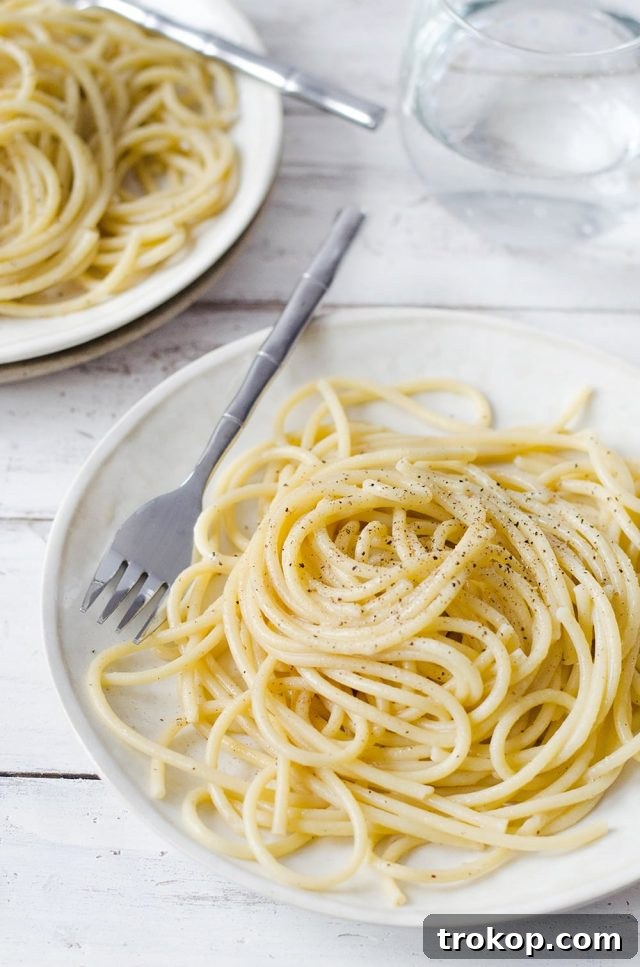
Explore More Easy Dinner Ideas
Beyond being the perfect, romantic date-night dish, Cacio e Pepe makes for an excellent last-minute meal whenever a craving for authentic Italian comfort food strikes. Healthier than its richer cousin, Fettuccine Alfredo, yet just as incredibly delicious and satisfying, this dish truly embodies comfort food done right. We’re always on the lookout for meals that combine ease with exceptional flavor. What’s your go-to date night meal or quick weeknight dinner that never fails to impress? In case you’re seeking more inspiration for simple yet delightful dinner ideas, here are a few of our personal favorites that are sure to become staples in your kitchen:
- The best easy meatloaf recipe for a hearty, comforting family dinner.
- Serve the best chocolate chip cookie recipe as a delightful dessert to any meal.
- Indulge in the nostalgic taste of classic snickerdoodles for a sweet treat.
- An easy rosemary baked lemon chicken recipe for a flavorful and healthy main course.
Cacio e Pepe Recipe
Equipment
-
Pasta pan
-
Skillet
-
Pasta strainer
Ingredients
- 8 oz pasta either fresh fettuccini, bucatini or spaghetti
- 3 tbsp unsalted butter
- 1 tsp freshly ground black pepper
- ½ cup freshly grated Pecorino Romano cheese can sub Parmigiano Reggiano
- Salt
Instructions
-
Bring a large pot of salted water to a boil. For the best flavor, salt it generously before adding the pasta—this helps season the noodles from the inside out and means you’ll need less salt later. Cook the spaghetti according to the package directions until al dente.
-
While the pasta cooks, heat a large skillet over medium-low heat. Add the butter and let it melt completely. Stir in the freshly cracked black pepper and reduce the heat to low. Toast for 1–2 minutes, stirring often, until fragrant (but not burned).
-
Before draining, reserve about 1/2 cup of the pasta cooking water. This starchy liquid is key to creating a silky sauce that clings beautifully to the noodles.
-
Add the drained pasta directly to the skillet with the toasted pepper. Pour in about 1/2 cup of the reserved pasta water and toss to coat the noodles evenly.
-
Gradually sprinkle in the grated Pecorino Romano, tossing constantly to create a creamy, emulsified sauce. Add more pasta water as needed to reach your desired consistency. Serve right away, topped with extra Pecorino and freshly cracked black pepper if you’d like.
Nutrition

Don’t forget to share your homemade Cacio e Pepe pasta creations with us on Instagram using the hashtag #sugarandclothloves. We absolutely love seeing all the delicious dishes you whip up! Looking for even more quick, easy, and flavorful recipes to add to your culinary repertoire? You can find them all right here!
Related Articles
50 Best Halloween Food Ideas for a Spooky Party
Continue Reading50 Best Halloween Food Ideas for a Spooky Party
31 Easy & Flavorful Summer Soups for Hot Days
Continue Reading31 Easy & Flavorful Summer Soups for Hot Days
33 Summer Crockpot Recipes to Beat the Heat
Continue Reading33 Summer Crockpot Recipes to Beat the Heat
34 Simple Sheet Pan Recipes
Continue Reading34 Simple Sheet Pan Recipes