

Mastering Italian Macarons: A Comprehensive Guide to Perfect Patisserie
Welcome to the exquisite world of Italian macarons! These delightful, delicate sandwich cookies are a triumph of patisserie, known for their crisp shells, chewy interiors, and characteristic “feet.” While macarons may have a reputation for being challenging, this guide will walk you through crafting the most delicious Italian macaron recipe using the reliable meringue method. Prepare to impress your guests with this elegant and utterly addictive dessert at your next gathering!

Macarons come in two primary forms: French and Italian. While both methods yield beautiful results, the Italian meringue technique, which is the focus of this recipe, creates a slightly sturdier and often more consistent macaron shell. This makes them a fantastic choice for those looking for a more robust cookie that holds up well to handling and a variety of fillings.
If you’re curious about the other method, you can find a tutorial for making macarons with French meringue here. Each method has its unique charm and learning curve, but the Italian approach, though it requires a hot sugar syrup, is often considered more forgiving in the final macaronage stage due to the meringue’s inherent stability. Feeling creative? Explore making colorful holiday treats like Holiday Wreath Meringue Macarons!
Essential Tools for Crafting Italian Macarons
Precision is key in macaron making. Having the right tools on hand will significantly increase your chances of success. Here’s what you’ll need to gather:
- Digital Baking Scale: Absolutely crucial for accurate measurements in grams. Volume measurements can be unreliable in macaron recipes.
- Stand Mixer: A stand mixer with a whisk attachment is highly recommended for creating a stable meringue. Hand mixers can work, but a stand mixer offers more consistent whipping.
- Digital or Candy Thermometer: Essential for precisely monitoring the temperature of your sugar syrup. This is non-negotiable for the Italian meringue method.
- Piping Bags and Round Couplers/Tips: For neatly piping your macaron shells. A large round tip (like an Ateco 804 or 805) is ideal.
- Fine-Mesh Strainer: For sifting your dry ingredients to ensure a lump-free batter.
- Small Saucepan: For preparing the sugar syrup.
- Rubber Spatula: Indispensable for the macaronage process, allowing for gentle yet thorough mixing.
- Baking Sheets: Sturdy, flat baking sheets are best.
- Parchment Paper or Silicone Mats: For lining your baking sheets, preventing sticking, and ensuring an even bake.
How To Make The Best Italian Macarons
Follow these detailed steps to create beautiful, delicious Italian macarons. Remember to read through the entire recipe before you begin, and gather all your ingredients and tools.
Step-by-Step Instructions: Preparing Your Macaron Batter
Step 1 – Prepare Egg Whites: Carefully separate 3 large egg whites. Divide them into two portions: 45 grams of egg whites should be placed in the clean bowl of your stand mixer, and the remaining 45 grams should be set aside in a separate bowl. Precision here is vital, so use your digital scale.
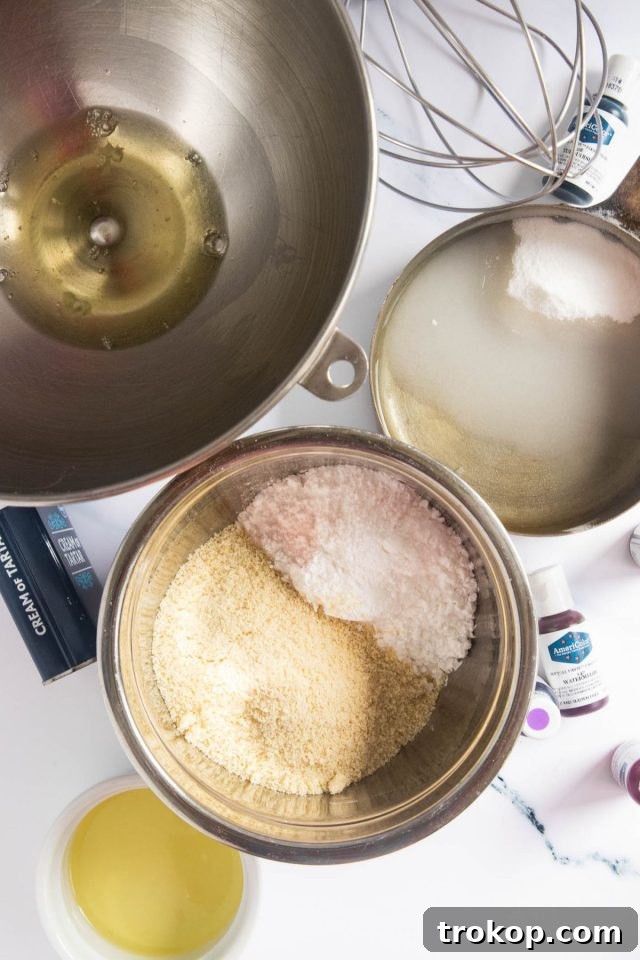
Step 2 – Measure Dry Ingredients: Accurately weigh out 112 grams (approximately 1 cup) of blanched almond flour and 118 grams (approximately 1 cup) of powdered sugar. Blanched almond flour ensures a smoother texture.
Step 3 – Sift Dry Ingredients: Using a fine-mesh strainer, sift the almond flour and powdered sugar into a clean, dry bowl. This step is critical for eliminating any lumps or larger bits of almond, which would prevent your macaron shells from being perfectly smooth. Don’t skip this, even if your ingredients look fine!
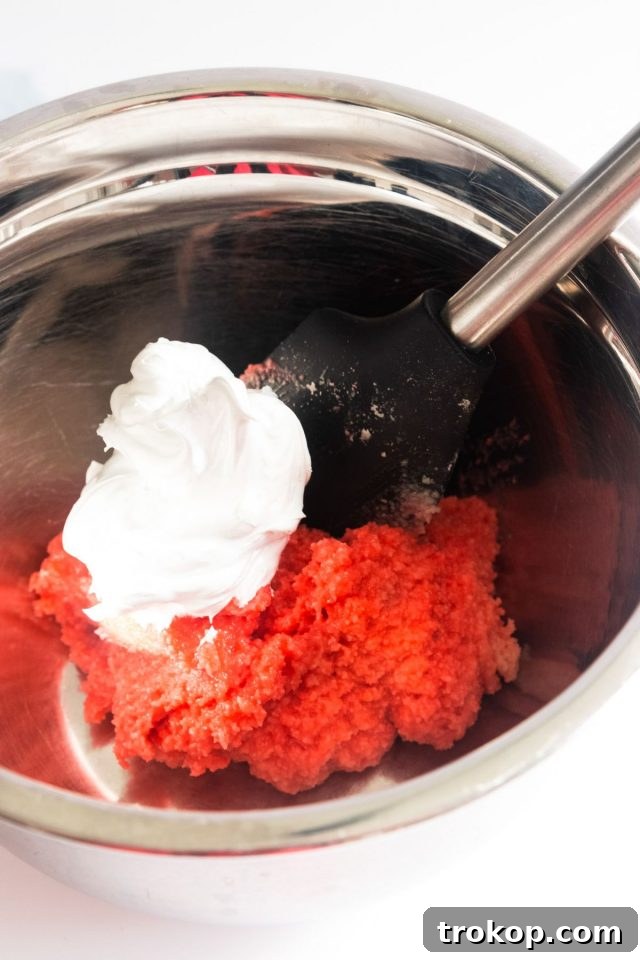
Step 4 – Create Almond Paste: To the sifted almond flour and powdered sugar mixture, add the second portion of 45 grams of egg whites and 1 teaspoon of vanilla extract. Stir these ingredients together with a spatula until they form a thick, uniform paste. This mixture is often referred to as the “tant pour tant” and will be combined with the meringue later.
While you’re mastering macarons, consider pairing them with a classic Italian meringue buttercream frosting. This lightly sweetened, silky smooth icing is not only perfect for filling macarons but also ideal for piping intricate designs on cakes or spreading on cookies.
Adding Color to Your Macarons
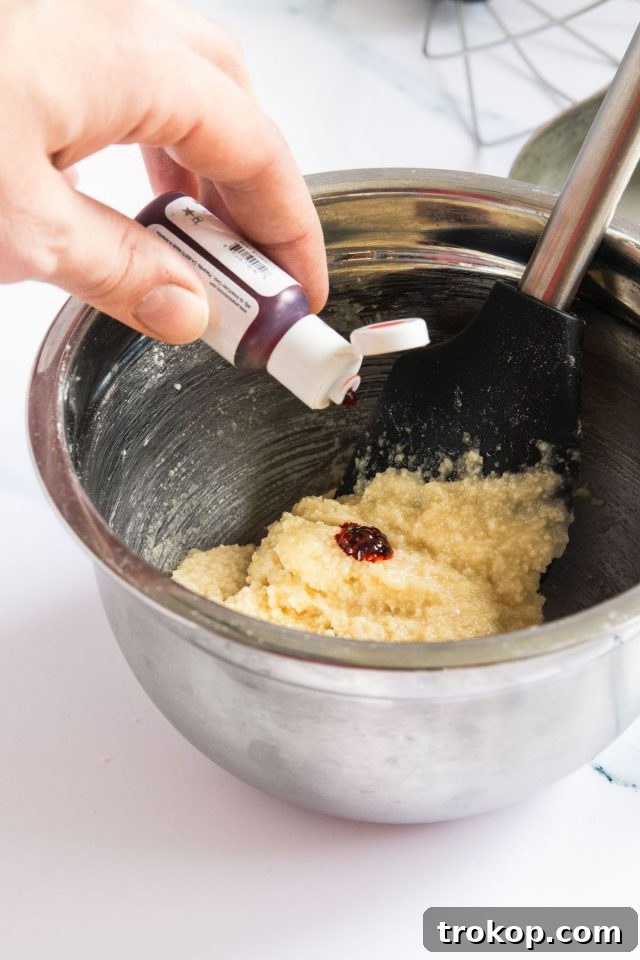
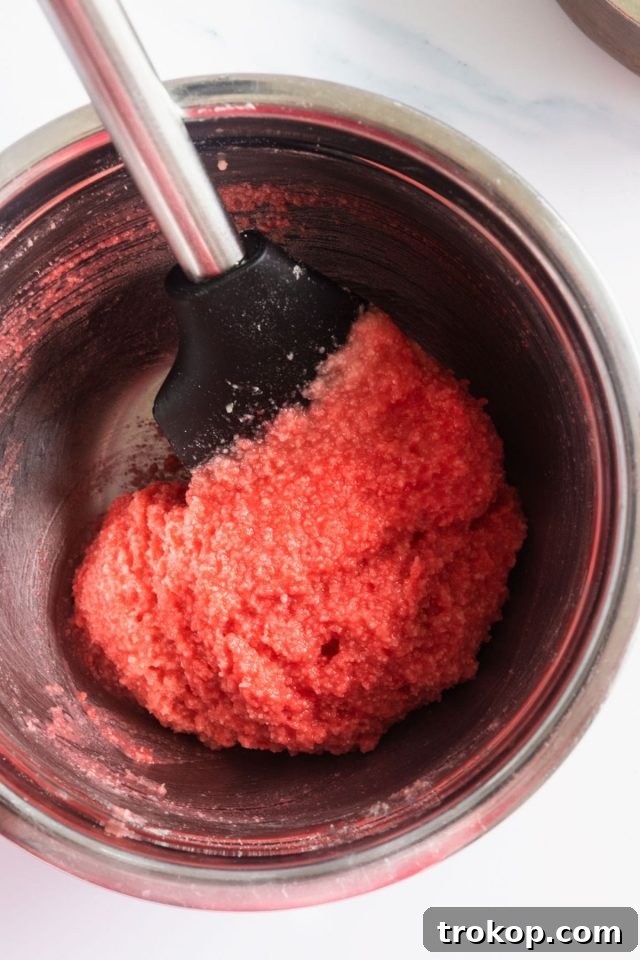
For Vibrant Macarons: If you desire colored macarons, now is the time to add your gel food coloring. Stir up to 1/4 teaspoon of gel food coloring into the almond flour paste you just created. Gel food coloring is preferred because it’s highly concentrated and won’t add excess liquid to your batter.
Important Coloring Tip: Avoid liquid food coloring entirely, as it can significantly alter the consistency of your batter, leading to runny macaron shells. Also, remember that the color of your batter will appear much darker and brighter than your final baked macarons. The color tends to lighten considerably once the meringue is folded in, so aim for a slightly more intense shade than your desired end result.
Crafting the Italian Meringue
Step 5 – Prepare Sugar Syrup: In a small saucepan, combine 112 grams (approximately 1 cup + 1 tablespoon) of granulated sugar with 80 grams (approximately 1/3 cup) of water. Heat this mixture over medium heat, stirring gently until the sugar dissolves. Avoid splashing sugar crystals on the sides of the pan.
Step 6 – Whip Egg Whites to Soft Peaks: While the sugar syrup is heating, add ¼ teaspoon of cream of tartar to the 45 grams of egg whites in your stand mixer bowl. Begin beating on medium speed until the egg whites reach the soft peak stage. This means that when you lift the whisk, the meringue forms a soft, drooping peak. If your egg whites reach soft peaks before the sugar syrup is ready, reduce the mixer speed to low to keep them moving and prevent separation.
Reaching the Soft Ball Stage
- Monitoring Sugar Syrup Temperature: Continue heating the sugar syrup without stirring until it reaches a temperature between 234-240°F (112-116°C). This critical point is known as the “soft ball stage” and is often marked on candy thermometers. Accurate temperature is crucial for the stability of your Italian meringue.
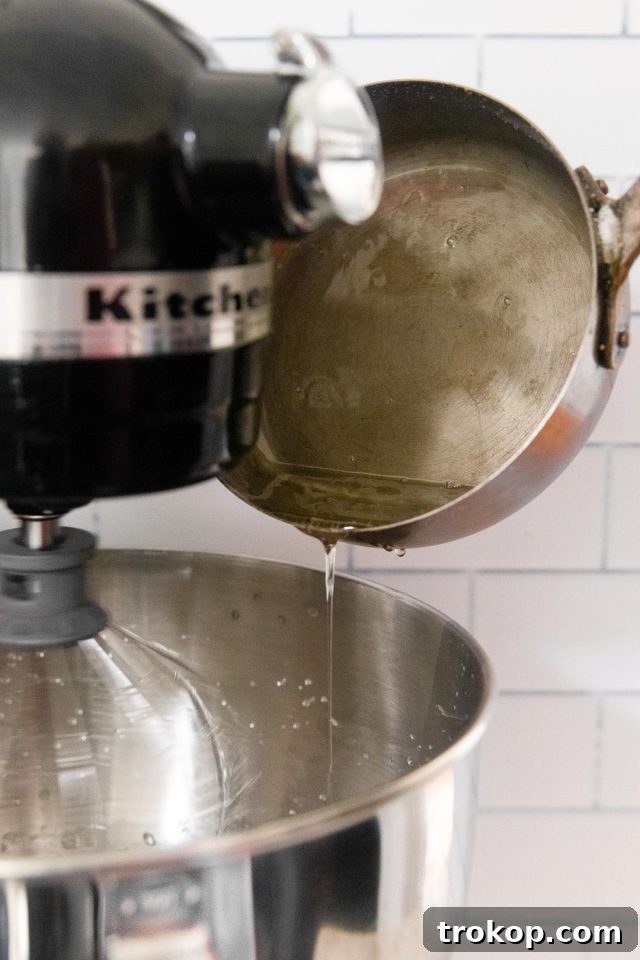
- Incorporating Syrup: Once the syrup hits the correct temperature, immediately increase your stand mixer’s speed to medium-high. Slowly and carefully pour the hot sugar syrup in a thin, steady stream down the side of the mixing bowl, avoiding the whisk itself. A small amount of splatter on the bowl sides is normal and unavoidable.
- Whipping to Stiff Peaks: Continue whipping the meringue on medium-high speed until it has cooled and reached the “stiff peak” stage. This means that when you lift the whisk, the meringue forms a firm, upright peak that holds its shape without drooping. The bowl should also feel cool to the touch. This stable, glossy meringue is your Italian meringue.
The Macronage Stage: Achieving the Perfect Batter Consistency
Step 7 – First Meringue Fold: Add approximately one-third of your freshly made Italian meringue to the almond flour paste. Using a rubber spatula, stir vigorously until it is completely combined. Don’t be alarmed if it appears that all the air is deflating from the meringue; this initial robust mixing is intentional. It helps to loosen the almond paste and creates a base consistency that allows the remaining meringue to be folded in gently without excessive deflation. This critical mixing process is called “macaronage.”
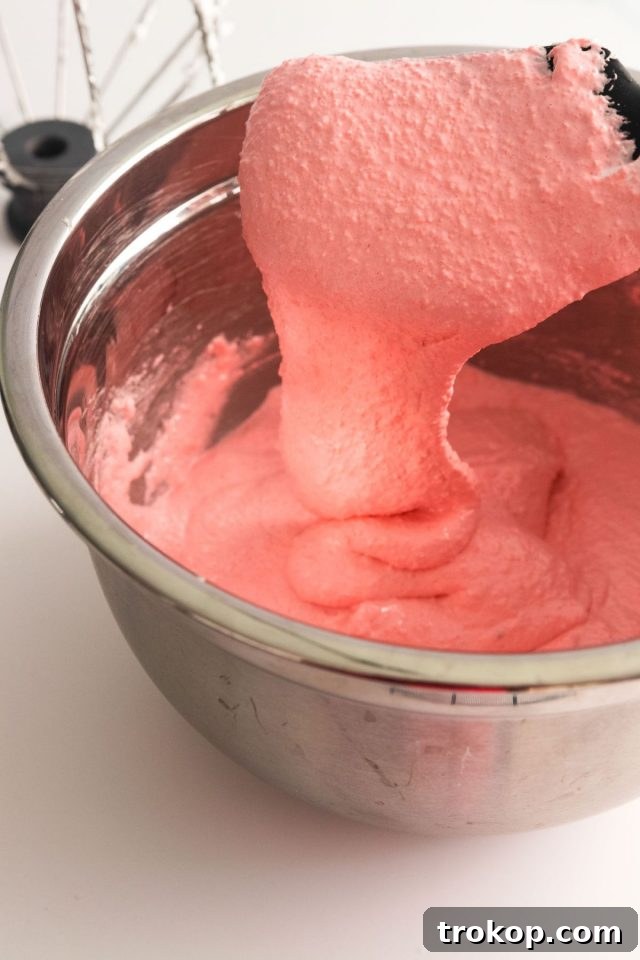
Step 8 – Subsequent Folds: Once the first portion of meringue is fully incorporated, add another third of the meringue to the batter. Gently fold it in until well combined. Repeat this step with the final third of the Italian meringue, folding until no streaks of meringue remain and the batter is homogeneous.
Achieving Macaron Consistency: Continue folding gently until the batter flows off your spatula in thick, continuous ribbons. When you lift your spatula, a ribbon of batter should fall and sit on top of the batter in the bowl for about 8-10 seconds before slowly melding back into the rest of the mixture. This is often called the “figure 8” test, as you should be able to draw a figure 8 with the ribbon before it breaks. If the batter is too thick, continue with a few more gentle folds and re-test. If it’s too thin and runs off too quickly, it’s over-mixed. Proper macaronage is the secret to perfect “feet.”
Step 9 – Prepare Baking Sheets: Line a couple of large baking sheets with clean parchment paper or silicone baking mats. If using parchment, you can draw macaron templates (1.5 to 2 inches in diameter) on the back to guide your piping for uniform size.
Piping Your Macarons
- Fill Piping Bag: Fit a clean piping bag with a round coupler and a large round tip. Carefully spoon your macaron batter into the piping bag.
- Piping Technique: Hold the piping bag straight up and down, perpendicular to your lined baking sheet. Apply even pressure and squeeze to the count of three (or until you reach your desired size). Stop applying pressure, then quickly lift the bag straight up, creating a small “kiss” or peak that will settle.
- Spacing: Continue piping, ensuring you leave 1.5 to 2 inches of space between each macaron shell to allow for spreading during baking.
- Release Air Bubbles: After piping all your shells, firmly tap each baking sheet against your countertop 2-3 times. This helps release any trapped air bubbles, which can cause cracked shells. Use a toothpick to pop any visible bubbles.
Baking Your Macarons to Perfection
- Preheat Oven: Preheat your oven to 325°F (160°C). An accurate oven temperature is paramount for macaron success, so consider using an oven thermometer.
- Drying (Resting) Time: This is a crucial step! Allow the piped macarons to sit undisturbed at room temperature for at least 30 minutes, or until a light skin forms on top. You should be able to gently touch the surface without any batter sticking to your finger. This drying period (often called “forming a skin” or “resting”) is essential for the macaron feet to develop properly during baking, as it creates a barrier that forces the batter to rise outwards from the base.
- Baking: Bake the macaron shells for 10-12 minutes. For even baking, rotate the pan halfway through the baking time. The shells are done when they have developed prominent “feet” and do not wobble on their bases when gently nudged.
- Cooling: Remove the baked macaron shells from the oven and slide the parchment paper or silicone mat directly onto a wire cooling rack. Allow them to cool completely on the baking sheet before attempting to remove them. Trying to remove them too soon will cause them to break or stick.
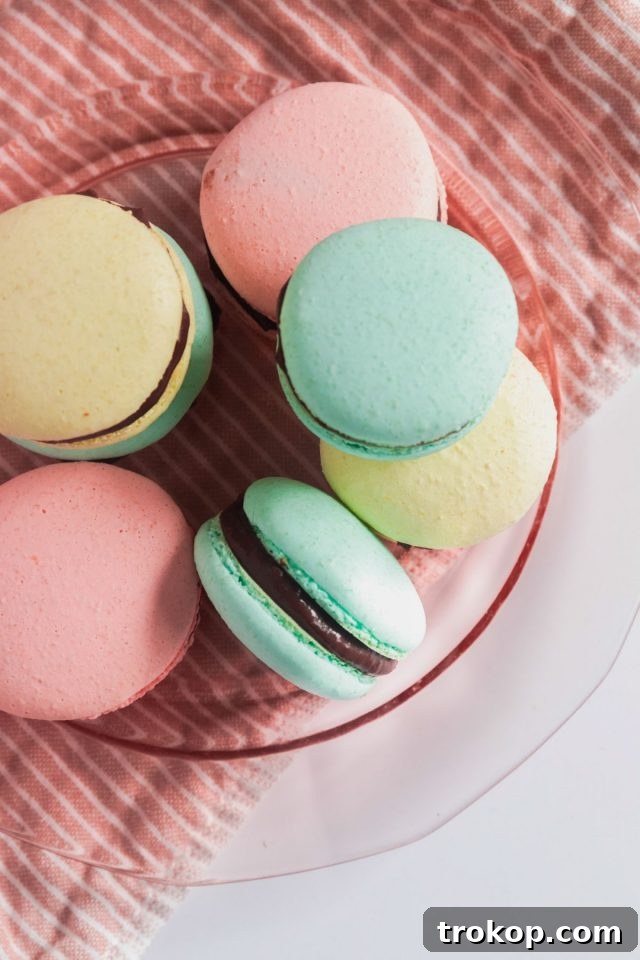
- Filling: Once completely cool, fill your macaron shells with a filling of your choice. A rich chocolate ganache provides a lovely contrast to the sweetness of the shells. Other excellent options include buttercream, fruit jams, or lemon curd.
- Maturation: For the best texture and flavor, allow the filled macarons to “mature” in the refrigerator for at least a few hours, preferably overnight. This allows the filling to soften the chewy interior of the shells. Store them in an airtight container in the refrigerator.
Italian Meringue Macarons vs. French Meringue Macarons: A Detailed Comparison
Understanding the differences between these two popular macaron methods can help you choose the best approach for your baking style and desired results.
- Meringue Stability: Italian meringue is notably sturdier and more stable than its French counterpart. This increased stability means you are less likely to over-fold the batter during the macaronage stage, making it a more forgiving method for beginners. French meringue is made by slowly incorporating granulated sugar into raw egg whites, resulting in a lighter, more delicate meringue. Italian meringue, on the other hand, involves cooking a hot sugar syrup to a specific temperature and then slowly beating it into partially whipped egg whites. This cooking process creates a denser, more resilient meringue that is less prone to deflating.
- Complexity & Equipment: The French meringue method is generally simpler, requiring only egg whites and granulated sugar whipped together. It can often be made with just a hand mixer and a baking scale. The Italian meringue method, however, is more involved due to the hot sugar syrup. It necessitates a candy thermometer for precise temperature control and a stand mixer for safely pouring the hot syrup while continuously whipping the egg whites. While more equipment is required, the payoff is often a more consistent and reliable macaron.
- Consistency of Results: Italian macarons tend to yield more consistent results. The robust nature of the Italian meringue makes the batter less finicky and easier to work with, often resulting in perfectly formed shells with prominent “feet.” French macarons, while equally delicious, can be more sensitive to over-mixing or under-mixing during macaronage, which can lead to hollow or cracked shells. If you struggle with consistency, the Italian method might be your new favorite.
- Texture: Both types of macarons boast a delicate crisp shell and a chewy interior. However, some bakers find that Italian macarons have a slightly chewier and denser texture compared to the airier French macarons, which can be a matter of personal preference.

Top Tips for Successful Macaron Baking
Achieving perfect macarons is a journey that often involves practice and attention to detail. These tips will help you navigate common challenges and boost your success rate:
- Eliminate Grease: Grease is the enemy of meringue! Even a tiny speck of fat can prevent your egg whites from whipping up properly, leading to a runny, failed batter. Before you begin, thoroughly wipe down all your mixing bowls, spatulas, and whisk attachments with white vinegar. This ensures all surfaces are free from any residual grease or oils.
- Use a Macaron Template: For uniform macaron shells, print out a macaron template (easily found online) and place it under your parchment paper or silicone mat. This will guide your piping and ensure all your cookies are consistent in size and shape, leading to a more professional finish.
- The Resting Period is Non-Negotiable: After piping your macarons, allow them to rest for a full 30 minutes (or longer in humid conditions) before baking. This resting period allows a thin skin to form on the surface of the shells. This “skin” is what helps the macaron feet develop during baking, as it creates resistance that forces the air to lift the batter upwards and outwards from the base.
- Calibrate Your Oven: Oven temperature accuracy is paramount for macarons. Invest in a simple oven thermometer and place it inside your oven to verify the true temperature. Many home ovens run hotter or cooler than their display indicates. If your oven is off by even 10°F, it can lead to burnt tops, underdeveloped feet, or uneven baking. Adjust your oven’s setting accordingly to match the actual temperature.
- Weigh Your Ingredients: While volume measurements (cups, teaspoons) are provided for convenience, a digital baking scale that weighs in grams is an indispensable tool for macaron making. Precision in ingredient measurement is critical to the delicate balance required for perfect macaron batter. Weighing ingredients will lead to significantly more consistent and successful results.
- Tap Your Trays: After piping and before resting, gently but firmly tap your baking sheets several times on your countertop. This helps to release any trapped air bubbles within the batter, which can cause hollow shells or cracks on the surface during baking. Use a toothpick to pop any remaining visible bubbles.
- Age Your Egg Whites: Some bakers swear by “aging” egg whites. This involves separating your egg whites a day or two in advance and storing them uncovered (or loosely covered) in the refrigerator. This process allows some of the moisture to evaporate, concentrating the proteins and potentially leading to a more stable meringue. Bring them to room temperature before using.
Explore Other Unique Macaron Recipes and Dessert Ideas
Once you’ve mastered Italian macarons, a world of creative macaron flavors and designs awaits! Here are some other delightful recipes and ideas to inspire your baking journey:
- Classic Macarons Recipe: How To Make French Macarons
- Easy Halloween Dessert: DIY Ghost Macarons
- Jumbo DIY Paper Mache Macarons (Craft Project)
- DIY Boob Macarons & Valentines Printables
- DIY Lucky Charms Macarons For St. Patrick’s Day
- An Ode To Macarons & Happy National Macaron Day!
- Homemade Macaron Ice Cream Recipe
- Galaxy Macarons Recipe

How to Make Italian Macarons
In this recipe, macarons are made using the Italian meringue method, a sturdier version that is often more consistent than their French cousin.
Prep Time: 30 mins
Cook Time: 12 mins
Rest Time: 30 mins
Course: Desserts
Cuisine: Macarons
Servings: 18 macarons
Rating: 5 out of 5 stars (9 votes)
Equipment
- Digital baking scale (weighs in grams)
- Stand mixer
- Digital thermometer or candy thermometer
- Piping bags and round couplers
- Strainer
- Small pot
- Rubber spatula
- Baking sheet
Ingredients
- 3 large egg whites (90 grams total, divided into two 45-gram portions)
- ¼ tsp cream of tartar
- 112 g blanched almond flour (1 cup)
- 118 g powdered sugar (1 cup)
- 1 tsp vanilla extract
- ¼ tsp gel food coloring (optional, for colored macarons)
- 112 g white granulated sugar (1 cup + 1 tbsp)
- 80 g water (1/3 cup)
For the chocolate ganache filling:
- 1 cup chopped dark chocolate
- 1 cup whipping cream
Instructions
- Separate Egg Whites: Separate 3 egg whites. Place 45 grams of egg whites in your stand mixer’s bowl, and set aside another 45 grams in a separate bowl.
- Sift Dry Ingredients: Weigh out 112 grams (1 cup) of blanched almond flour and 118 grams (1 cup) of powdered sugar. Sift them together through a strainer into a clean bowl to remove any lumps.
- Form Almond Paste: Add the second 45-gram portion of egg whites and 1 teaspoon of vanilla extract to the almond flour and powdered sugar. Stir until a thick paste forms.
- Add Color (Optional): If making colored macarons, stir up to 1/4 teaspoon of gel food coloring into the almond flour paste until fully incorporated. Avoid liquid food coloring. Remember the color will lighten.
- Prepare Sugar Syrup: Combine 112 grams (1 cup + 1 tablespoon) of granulated sugar with 80 grams (1/3 cup) of water in a small pot. Heat over medium heat, stirring gently until the sugar dissolves.
- Whip Egg Whites: While the sugar syrup heats, add ¼ teaspoon cream of tartar to the egg whites in the stand mixer bowl. Beat until they reach soft peaks. If ready early, reduce mixer speed to low.
- Heat Syrup to Soft Ball Stage: Continue heating the sugar syrup until it reaches 234-240°F (112-116°C). Use a candy thermometer for accuracy.
- Create Italian Meringue: Once the syrup is at temperature, turn the mixer speed up to medium-high. Slowly pour the hot sugar syrup down the side of the bowl into the whipping egg whites. Continue whipping until the meringue is stiff, glossy, and has cooled to room temperature (stiff peak stage).
- First Macronage Fold: Add about one-third of the Italian meringue to the almond flour paste. Stir vigorously with a rubber spatula until completely combined. This step is to loosen the paste.
- Second Macronage Fold: Add another 1/3 of the meringue. Gently fold it in until well combined.
- Final Macronage: Add the last third of the meringue. Fold gently until no streaks remain and the batter flows off your spatula in thick, continuous ribbons, holding its shape on the surface for 8-10 seconds before melding back in (the “figure 8” test).
- Prepare for Piping: Line a couple of large baking sheets with parchment paper or silicone mats.
- Fill Piping Bag: Place the macaron batter into a piping bag fitted with a round tip.
- Pipe Macarons: Hold the piping bag straight up. Squeeze for about three counts, then stop pressure and lift straight up. Leave 1.5 to 2 inches between each macaron. Tap the trays firmly on the counter a few times to release air bubbles.
- Preheat Oven: Preheat your oven to 325°F (160°C).
- Rest Macarons: Let the piped macarons dry for at least 30 minutes, or until a dry skin forms on top.
- Bake: Bake the macaron shells for 10-12 minutes, rotating the pan halfway through.
- Cool Completely: Remove from the oven and cool completely on the baking sheet on a wire rack before attempting to remove.
- Fill: Fill the cooled macaron shells with your chosen filling, such as chocolate ganache, buttercream, or jam.
- Mature and Store: Allow filled macarons to sit, preferably overnight, in the refrigerator for the best texture. Store in an airtight container in the fridge.
To make the chocolate ganache filling:
- Place the chopped dark chocolate in a mixing bowl.
- Heat the whipping cream in a saucepan until it’s steaming and bubbles form around the edges, but do not let it boil.
- Pour the heated cream over the chocolate and let it sit for about 10 minutes.
- Stir the chocolate and cream until smooth and glossy, with no solid chocolate chunks.
- Allow the ganache to cool and thicken to a pipeable consistency before piping it onto half of the macaron shells and gently pressing another shell on top. Your filled macarons are ready!
Nutrition Information (per serving)
- Calories: 203 kcal
- Carbohydrates: 21g
- Protein: 3g
- Fat: 14g
- Saturated Fat: 7g
- Polyunsaturated Fat: 1g
- Monounsaturated Fat: 3g
- Cholesterol: 18mg
- Sodium: 14mg
- Potassium: 26mg
- Fiber: 2g
- Sugar: 17g
- Vitamin A: 194IU
- Vitamin C: 1mg
- Calcium: 22mg
- Iron: 1mg
Keyword: italian macarons
We absolutely love seeing your culinary creations! Don’t forget to share your Italian macaron masterpieces with us on Instagram using the hashtag #sugarandclothloves. For more quick, delicious, and inspiring recipes, you can always find them right here!
You Might Also Like These Dessert Recipes:
34 Decadent Desserts for Valentine’s Day
Sweeten up your celebration with these irresistible desserts for Valentine’s…
Continue Reading
Homemade Macaron Ice Cream Recipe
This irresistible homemade macaron ice cream recipe is a match…
Continue Reading
Trick or Treat Yourself with These 31 Spooktacular Halloween Desserts
From spooky cupcakes to creepy cookies, discover the most delicious…
Continue Reading
Galaxy Macarons Recipe
If you’ve mastered macarons, Galaxy Macarons are a great way…
Continue Reading