
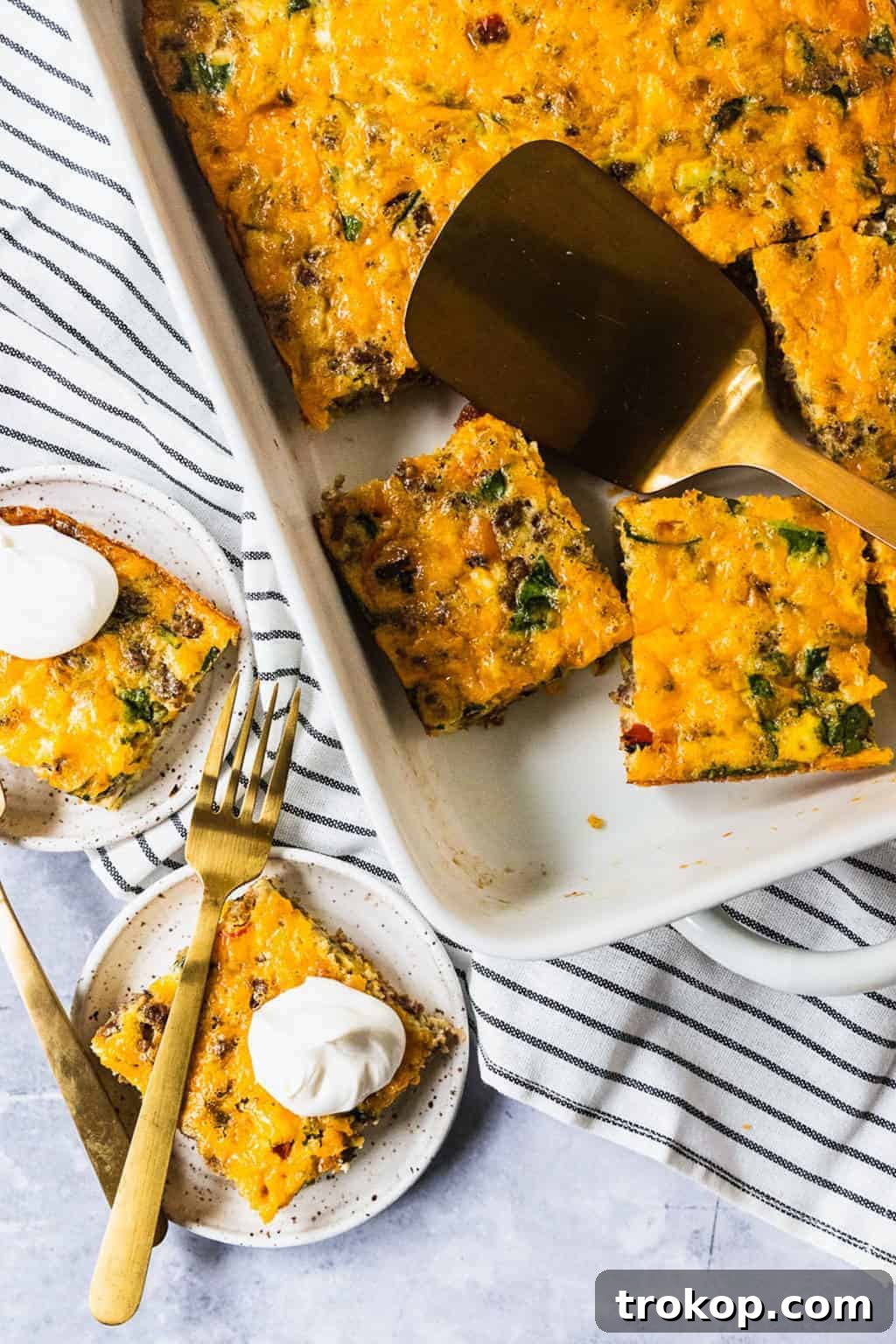
Welcome to your new favorite breakfast solution: the Keto Breakfast Casserole. This recipe isn’t just a meal; it’s a strategy for starting your day strong, fueled by wholesome ingredients, and perfectly aligned with a low-carb lifestyle. Whether you’re deeply entrenched in the keto diet or simply looking for healthier, more satisfying breakfast options, this casserole delivers on all fronts – taste, nutrition, and convenience. It’s an ideal choice for meal planning, ensuring you have a delicious and easy breakfast ready to go, even on the busiest mornings.

Mornings can often feel like a frantic rush, leaving little time for preparing a nourishing meal. This Keto Breakfast Casserole is designed to be the ultimate time-saving, low-carb breakfast solution that doesn’t compromise on flavor or health benefits. It’s brimming with high-quality protein, essential healthy fats, and a vibrant assortment of vegetables, creating a hearty and flavorful start to your day. Say goodbye to the sugar crashes and carb overload found in many traditional breakfast options. What truly sets this casserole apart is its incredible versatility; you can effortlessly customize it with your favorite keto-friendly ingredients, making it a satisfying and personal meal that seamlessly fits your dietary needs.
Imagine waking up, knowing that a delicious, nutrient-packed breakfast is already prepared. This low-carb breakfast casserole excels as a meal prep hero. You can bake a large batch on Sunday, then divide it into convenient portions that are ready to be reheated throughout the week. This simple act transforms chaotic mornings into stress-free starts, giving you back precious time. Each serving is substantial enough to keep you feeling full and energized until lunchtime, making it an excellent choice for maintaining steady blood sugar levels and avoiding mid-morning cravings. Its versatility also extends beyond breakfast; it’s equally delightful for a casual brunch, a light dinner, or even as a wholesome snack.
For those who, like me, often crave savory delights, this keto casserole is a true gem. While I have a soft spot for sweet breakfasts occasionally, I frequently find myself reaching for savory, protein-rich options when I need something quick, deeply nourishing, and packed with flavor. Along with this incredible keto casserole, other savory favorites include a veggie-packed savory oatmeal bowl or delightful breakfast egg muffins. These dishes prove that healthy eating can be both easy and incredibly satisfying, proving that healthy and delicious can go hand in hand.
The Power of a Keto Breakfast: More Than Just a Meal
Embracing a keto lifestyle means prioritizing healthy fats, adequate protein, and minimal carbohydrates. This breakfast casserole is a perfect embodiment of these principles. By focusing on nutrient-dense ingredients, it supports sustained energy levels, helps manage weight, and promotes overall well-being. Unlike carb-heavy breakfasts that can lead to energy spikes and subsequent crashes, a keto casserole keeps you feeling steady and focused throughout your morning.
Beyond its health benefits, this casserole simplifies healthy eating. It’s a fantastic solution for busy professionals, parents, or anyone looking to streamline their meal prep without sacrificing flavor. With just a little bit of planning, you can ensure a week of effortless, delicious, and healthy breakfasts that keep you on track with your dietary goals.
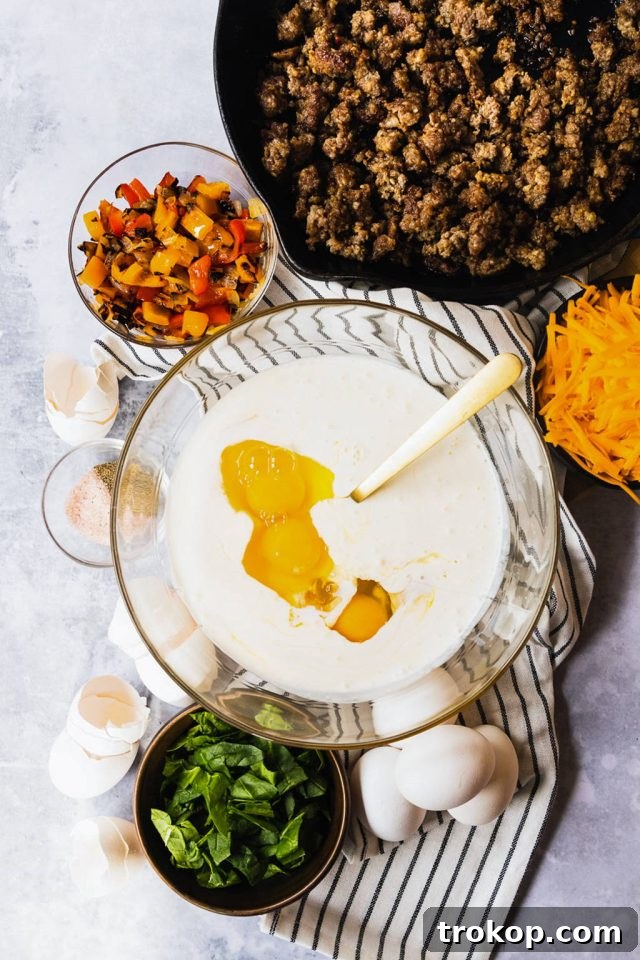
Key Ingredients for Your Keto Breakfast Casserole
Creating a truly exceptional keto breakfast casserole starts with selecting the right ingredients. Each component plays a vital role in both flavor and texture, while ensuring the dish remains low in carbohydrates and high in essential nutrients.
- Large Eggs: Eggs are the cornerstone of this casserole, providing its light, fluffy, and protein-rich base. They bind all the ingredients together, creating a cohesive and satisfying texture. For best results, use fresh, large eggs.
- Breakfast Sausage: Opt for a high-quality, keto-friendly breakfast sausage free from hidden sugars, starch-based additives, or unwanted fillers. Always scrutinize the nutrition label to confirm it aligns with your keto or low-carb diet. Look for low total carbohydrates, then subtract the fiber content to determine the net carb count. You have the flexibility to choose between pork, turkey, or even chicken sausage, depending on your preference and dietary needs.
- Assorted Low-Carb Vegetables: Vegetables not only add a burst of flavor and vibrant color but also introduce essential vitamins and fiber without spiking carb counts. Excellent low-carb choices include fresh spinach, crisp bell peppers (any color), earthy mushrooms, tender broccoli, or mild zucchini. Be sure to steer clear of starchy vegetables like corn or potatoes, which are high in carbohydrates.
- Shredded Cheese: Cheese is a fantastic addition, melting into a creamy layer that holds the casserole together while imparting rich flavor. Popular choices like sharp cheddar, creamy gouda, or mild mozzarella, or even a pre-mixed blend, all work beautifully. Choose your favorite, or experiment with different varieties for unique flavor profiles.
- Heavy Whipping Cream: This ingredient is crucial for adding luxurious richness and ensuring a wonderfully creamy texture. It replaces milk, which contains lactose sugars, making the casserole perfectly keto-friendly without sacrificing indulgence.
- Salt: Seasoning is key to bringing out the best flavors. Adjust the amount of salt to taste, taking into consideration the inherent saltiness of your chosen sausage and cheese.
- Fine Ground Black Pepper: A touch of freshly ground black pepper adds a subtle spice and a nuanced depth that perfectly balances the richness of the eggs and cream.
Exploring Low-Carb Vegetable Variations
The beauty of this keto breakfast casserole lies in its adaptability. You can effortlessly mix and match a variety of low-carb vegetables to infuse your dish with diverse flavors, appealing colors, and a significant nutrient boost. Proper preparation ensures optimal texture in the final baked product.
- Bell Peppers: Dice bell peppers (red, yellow, orange, or green) into ½-inch chunks. They can be added raw for a crisp, fresh bite that softens slightly during baking, or you can sauté them briefly beforehand for a softer texture and a slightly sweeter flavor.
- Onions: Onions beautifully complement eggs, adding a foundational savory note. For the best flavor, lightly cook them in a skillet until translucent before incorporating them into the mixture. This mellows their sharpness and enhances their sweetness.
- Broccoli or Cauliflower: These cruciferous vegetables are excellent low-carb choices. However, due to their higher water content, it’s advisable to lightly steam or roast them first. This step removes excess moisture, preventing a watery casserole. Leftover roasted broccoli or cauliflower florets are perfect for this recipe.
- Leafy Greens (Spinach, Kale, Swiss Chard): Incorporating leafy greens is a fantastic way to boost the nutritional value of your casserole. Delicate greens like spinach can be added directly to the raw egg mixture, as they wilt quickly during baking. More fibrous greens, such as kale or Swiss chard, should be sautéed in a bit of olive oil or butter for 2–3 minutes until slightly tender before mixing them in.
- Mushrooms: Sliced mushrooms add an earthy depth. Sauté them until their moisture is released and they start to brown slightly before adding to the casserole mix to ensure they don’t make the casserole watery.
- Zucchini or Yellow Squash: These mild vegetables can be diced or shredded. If shredded, gently squeeze out excess water before adding to prevent a soggy casserole. A quick sauté can also help reduce moisture.
- Vegetables to Strictly Avoid: Be mindful of high-carb, starchy vegetables that can quickly push you beyond your daily carbohydrate limits on a keto diet. This includes sweet potatoes, potatoes, beets, corn, peas, and carrots, especially in larger quantities.
💡 Pro Tip: Don’t let leftover greens go to waste! Incorporate them into a refreshing detox green smoothie or simply stir them into scrambled eggs the next day for another quick, healthy, and easy breakfast option.
Maximizing Flavor: Ingredient Quality and Preparation
The success of your Keto Breakfast Casserole doesn’t just come from the recipe steps, but also from the quality of your ingredients and how you prepare them. Choosing organic eggs, pasture-raised sausage, and fresh, vibrant vegetables can significantly elevate the taste and nutritional profile of your dish. Furthermore, taking a few extra moments for preparation, such as thoroughly browning your sausage or sautéing moisture-rich vegetables, ensures that every bite is packed with optimal flavor and the perfect texture.
Think about the flavor layers. A well-seasoned sausage provides a savory base. The rich creaminess from the eggs and heavy cream adds a luxurious mouthfeel. The vegetables contribute freshness and textural contrast, while the cheese offers a salty, umami depth. Don’t be afraid to taste and adjust seasonings as you go, especially after cooking the sausage, as its salt content can vary widely.
Effortless Steps to Prepare Your Keto Breakfast Casserole
Making this keto breakfast casserole is straightforward, even for novice cooks. Follow these simple steps for a perfect, savory, and satisfying meal:
1 — Preheat the oven and prepare your baking dish:
Begin by preheating your oven to 350°F (175°C). While the oven heats, lightly grease a 9×13-inch baking dish (or any oven-safe dish with at least a 3-quart capacity) with olive oil or a nonstick cooking spray. This crucial step prevents the casserole from sticking, ensuring easy serving and cleanup.
2 — Brown the breakfast sausage:
In a large skillet, cook your chosen breakfast sausage over medium heat. As it cooks, use a wooden spoon or spatula to break it into small, even crumbles. Continue cooking until the sausage is thoroughly browned and no pink remains, ensuring it’s fully cooked through. This browning step adds a significant depth of flavor.
3 — Drain excess fat from the sausage:
Once the sausage is cooked, carefully transfer it to a colander placed over a heat-safe bowl. Allow the excess grease to drain completely. It’s important to let the collected fat cool and solidify before discarding it properly. Never pour hot grease down your sink drain, as it can solidify and cause severe pipe clogs.
4 — Prepare and potentially sauté the vegetables:
Thoroughly wash and chop your chosen low-carb vegetables into uniform pieces (refer to the recipe notes or the vegetable ideas section above for suggestions). If you’re incorporating vegetables known to release moisture during cooking (such as mushrooms, spinach, or zucchini), lightly sauté them in the same skillet you used for the sausage (after draining the fat). Cook them for a few minutes until they release their excess water and begin to soften. This prevents a watery casserole. Once prepared, set the vegetables aside to cool slightly.
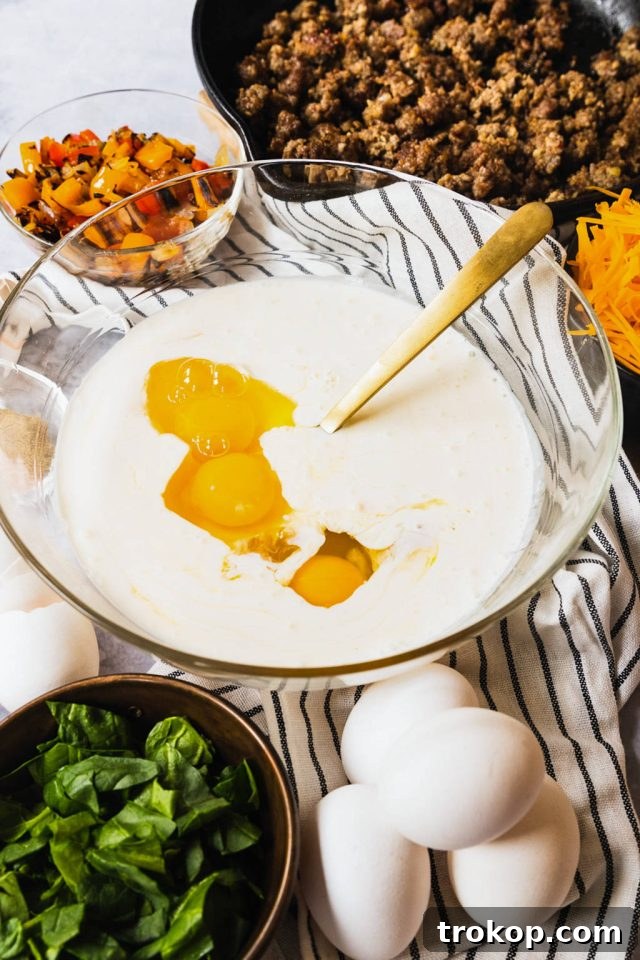
5 — Whisk the egg and cream mixture:
In a spacious mixing bowl, vigorously whisk together the large eggs and heavy whipping cream until the mixture is smooth, homogenous, and well combined. This ensures a consistent texture throughout the casserole. Stir in the salt and ground black pepper, seasoning generously to taste.
6 — Combine all the savory ingredients:
Add the cooked and drained sausage, the prepared vegetables (cooled slightly), and 1 cup of shredded cheese to the egg mixture. Gently stir all the ingredients until they are evenly distributed and coated in the egg mixture. Be careful not to overmix, as this can affect the casserole’s final texture.
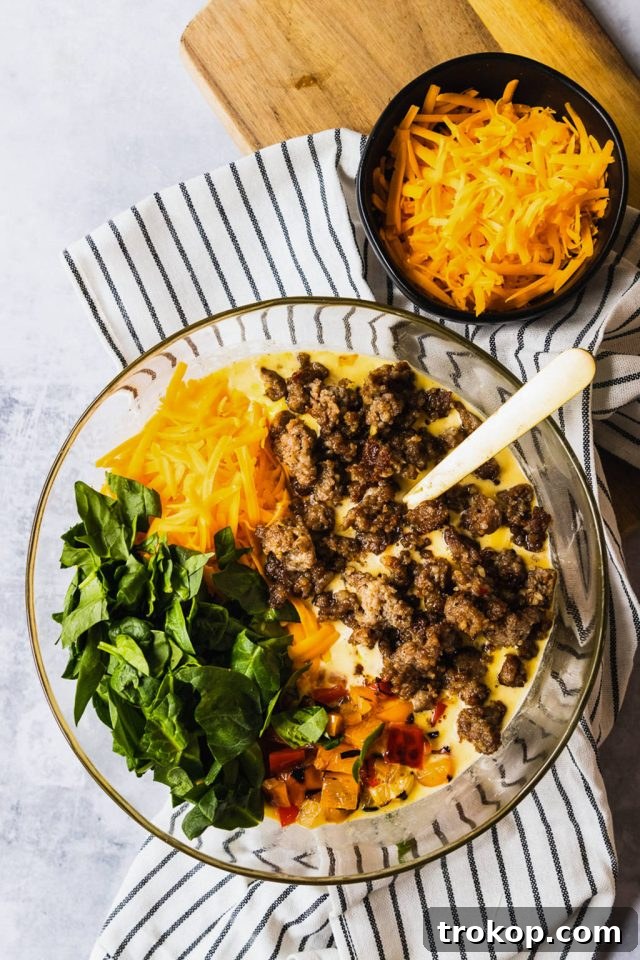
7 — Assemble the casserole for baking:
Pour the entire mixture into your prepared baking dish, using a spatula to spread it out evenly from edge to edge. For an irresistible golden and bubbly crust, generously sprinkle the remaining 1 cup of shredded cheese over the top of the casserole.
8 — Bake to golden perfection:
Transfer the baking dish to the preheated oven and bake for approximately 35–40 minutes. The casserole is done when it’s beautifully puffed, golden brown on top, and the eggs are fully set in the center. To test for doneness, gently press the middle of the casserole with a clean finger or the back of a spoon; it should feel firm and spring back, not soft or wet.
9 — Cool, slice, and serve:
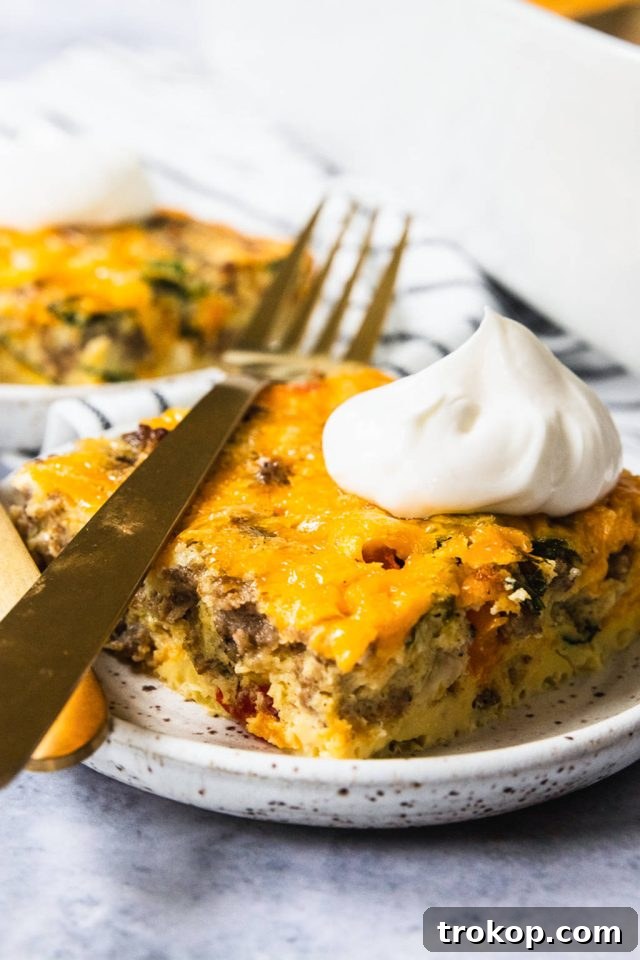
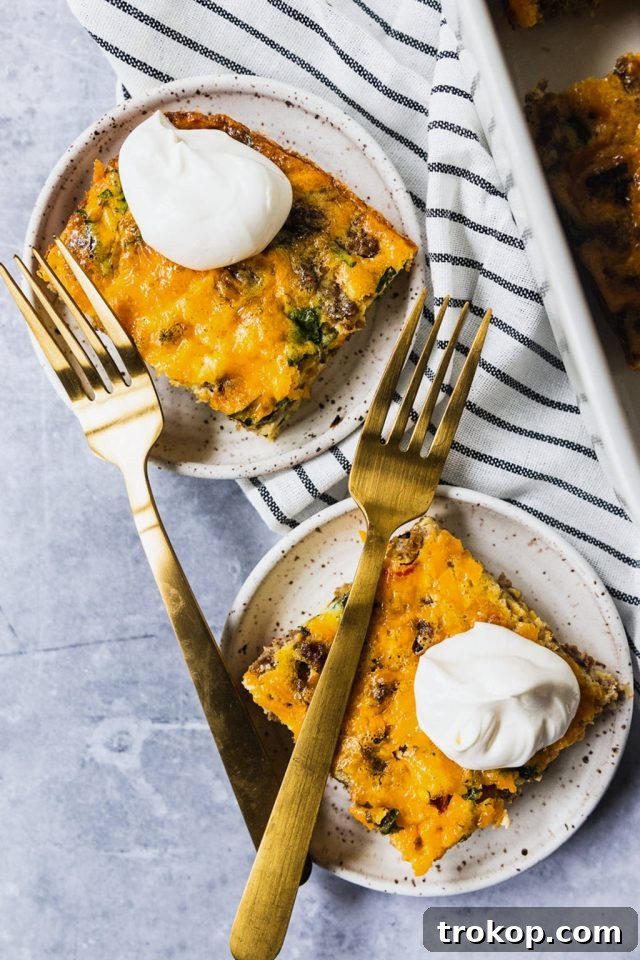
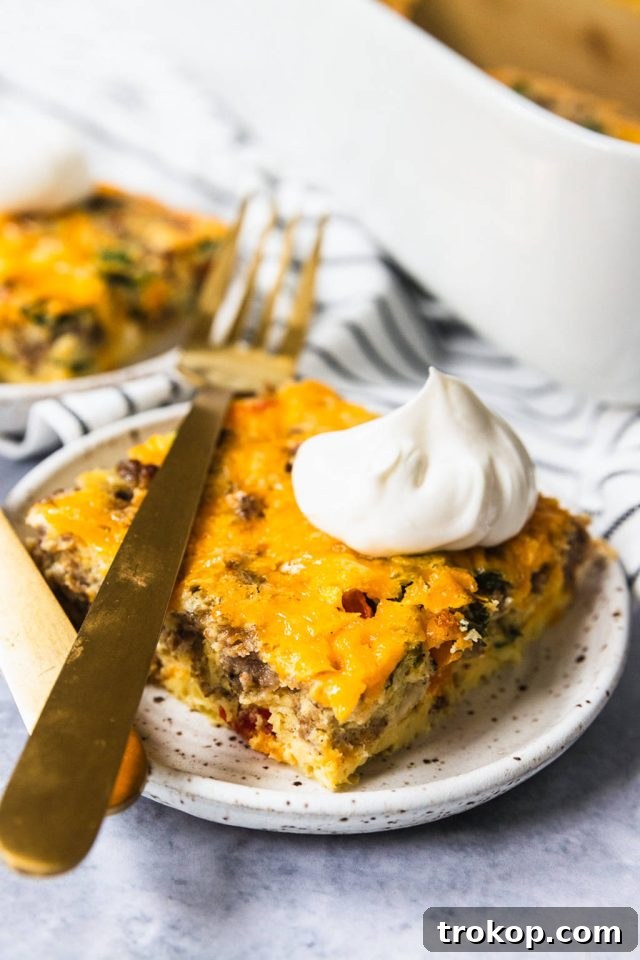
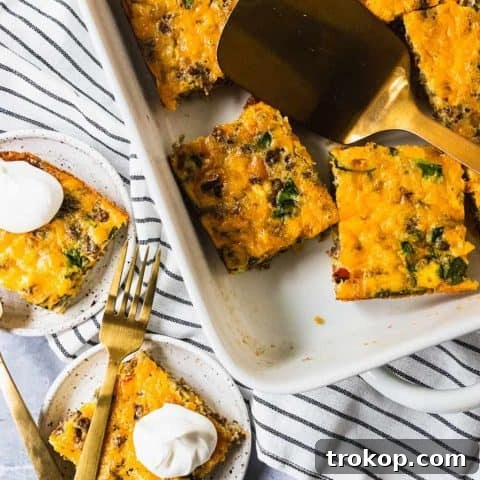
Once baked, remove the casserole from the oven and allow it to cool for 5–10 minutes before slicing into individual portions. This cooling period helps the casserole set further, making it easier to cut cleanly. Serve warm, and consider enhancing each slice with an optional dollop of sour cream, a few creamy avocado slices, or a sprinkle of fresh herbs like chives or parsley for added freshness.

Expert Tips for Your Low-Carb Breakfast Casserole Success
Mastering this Keto Breakfast Casserole means more than just following the recipe; it’s about smart preparation, creative customization, and efficient storage. Here are some invaluable tips to ensure your casserole is always a hit:
- Make-Ahead Mastery: For ultimate convenience, assemble the entire casserole the night before. Simply combine all ingredients, pour into the greased baking dish, cover it tightly with plastic wrap or foil, and refrigerate overnight. In the morning, uncover and bake fresh for an effortless and delicious low-carb breakfast that feels like you put in extra effort.
- Dynamic Flavor Add-Ins: Elevate the flavor profile with simple additions. A dash of smoked paprika or a pinch of cayenne pepper can introduce a welcome warmth or heat. Freshly chopped herbs like parsley, thyme, or chives stirred into the egg mixture or sprinkled on top after baking add brightness and aromatic complexity. For a delightful crunch and a burst of savory flavor, sprinkle a generous amount of everything bagel seasoning over the top before baking.
- Dairy-Free Adaptation: If you’re avoiding dairy, this recipe can be easily modified. Replace the heavy whipping cream with unsweetened almond milk or coconut milk (from a carton, not canned, for a neutral flavor). Pair this with your favorite dairy-free shredded cheese alternative to maintain the creamy texture and cheesy goodness.
- Choosing the Perfect Cookware: While any oven-safe baking dish holding at least 3 quarts will work, the dimensions of your dish impact the baking time. A standard 9×13-inch dish will yield a thinner casserole that bakes quickly and evenly (typically 35–40 minutes). If you opt for a smaller, deeper dish, be aware that it will require a few extra minutes in the oven to ensure the center is fully cooked and set.
- Smart Storage Solutions: Leftover casserole portions keep beautifully in an airtight container in the refrigerator for up to 3-4 days. This makes them perfect for grab-and-go breakfasts or quick meals throughout the week.
- Freezing for Future Feasts: This casserole is incredibly freezer-friendly. Once individual portions have cooled completely, wrap them tightly in aluminum foil or place them in freezer-safe bags. They can be stored in the freezer for up to 2 months. When ready to enjoy, thaw overnight in the refrigerator and reheat.
- Reheating for Optimal Enjoyment: For individual slices, a quick zap in the microwave for 30–60 seconds usually does the trick. If you prefer a slightly crispier edge, reheat slices in a lightly oiled skillet over medium heat for a few minutes per side until warmed through. Alternatively, larger portions can be reheated in a preheated oven at 325°F (160°C) until thoroughly warmed.
- Creative Serving Ideas: Beyond sour cream or avocado, consider serving your keto breakfast casserole with a side of fresh salsa, a drizzle of hot sauce, or a simple green salad for a complete and balanced meal.
Frequently Asked Questions About Keto Breakfast Casseroles
To help you perfect your keto breakfast casserole experience, here are answers to some common questions:
- Can I make this casserole vegetarian? Absolutely! Simply omit the breakfast sausage and increase the amount of low-carb vegetables. You can also add plant-based protein alternatives like crumbled firm tofu or a vegetarian sausage substitute (ensure it’s keto-friendly).
- What other meats can I use? Feel free to substitute breakfast sausage with other cooked, keto-friendly meats. Crumbled bacon, diced ham, cooked ground beef, or even shredded chicken are excellent choices. Ensure any added meats are fully cooked and drained of excess fat.
- How can I ensure my casserole isn’t watery? The key is managing moisture from vegetables. Always pre-sauté high-moisture vegetables like mushrooms, spinach, and zucchini until their liquid has evaporated. If using frozen vegetables, thaw them completely and squeeze out all excess water before adding.
- What are net carbs, and why do they matter for keto? Net carbs are the total carbohydrates in a food minus the fiber and sugar alcohols (if applicable). For keto, net carbs are the primary count to track, as fiber is not digested and doesn’t impact blood sugar. Always check nutrition labels, especially for processed ingredients like sausage, to calculate net carbs accurately.
- Can I add more cheese? Yes, you can! While the recipe calls for 2 cups, an extra half-cup (or more, if desired) can be mixed into the egg mixture or sprinkled on top for an even cheesier casserole.
More Easy Low-Carb Keto Recipes to Discover
If you’re committed to the keto diet or simply seeking delicious and straightforward healthy recipes for home cooking, you’re in the right place. Explore some of our top low-carb favorites from the archives to keep your culinary journey exciting and aligned with your health goals:
- Flavorful Avocado Salad Chicken Wraps
- Decadent Keto Strawberry Cheesecake
- Perfectly Crispy Keto Pizza Crust
- Creamy Low-Carb Keto Cheesecake
Keto Breakfast Casserole Recipe
Need a healthy breakfast? This Keto Breakfast Casserole is great for meal planning and gives you a low-carb, easy breakfast to start your day off right!
Prep Time: 20 mins
Cook Time: 40 mins
Total Time: 1 hr
Course: Breakfast
Cuisine: Casseroles
Equipment
- Mixing bowl
- 9×13-inch baking dish (or one that holds at least 3 quarts)
- Skillet
- Whisk (or large fork)
Servings: 12
Ingredients
- 14 large eggs (use about 2½ cups if you’re working with smaller eggs)
- 1 lb breakfast sausage
- 2-3 cups low-carb vegetables (refer to the post for more info on how to prepare the veggies)
- 2 cups shredded cheese (of your choice)
- ¾ cup heavy whipping cream
- 1 ½ tsp salt
- 1 tsp fine ground black pepper
Instructions
- Preheat your oven to 350°F (175°C). Lightly grease the baking dish with olive oil or nonstick spray to prevent sticking.
- In a large skillet over medium heat, cook the breakfast sausage, breaking it up into small crumbles with a wooden spoon or spatula. Continue cooking until the sausage is browned and fully cooked with no pink remaining.
- Place a colander over a bowl and carefully pour the cooked sausage into it to drain off any excess grease.
- Wash and chop your low-carb vegetables (see post for suggestions). If you’re using vegetables that release moisture (like mushrooms, spinach, or zucchini), lightly sauté them in the same skillet for a few minutes to remove excess water. Set aside to cool slightly.
- In a large mixing bowl, whisk together the eggs and heavy whipping cream until smooth and well combined. Stir in the salt and pepper to season.
- Add the cooked sausage, vegetables, and 1 cup of shredded cheese into the egg mixture. Stir gently until everything is evenly coated.
- Pour the mixture into the prepared baking dish, spreading it evenly with a spatula. Sprinkle the remaining 1 cup of cheese over the top for a golden, bubbly crust.
- Bake for 35–40 minutes, or until the casserole is puffed and the eggs are fully set in the center. Check for doneness by gently pressing the middle. It should feel firm, not soft or wet.
- Remove from the oven and let the casserole cool for 5–10 minutes before slicing. Serve warm, optionally topped with a spoonful of sour cream, avocado slices, or fresh herbs.
Nutrition (per serving)
- Calories: 315kcal
- Carbohydrates: 5g
- Protein: 18g
- Fat: 25g
- Saturated Fat: 11g
- Polyunsaturated Fat: 3g
- Monounsaturated Fat: 9g
- Trans Fat: 1g
- Cholesterol: 253mg
- Sodium: 741mg
- Potassium: 257mg
- Fiber: 1g
- Sugar: 1g
- Vitamin A: 2192IU
- Vitamin C: 4mg
- Calcium: 145mg
- Iron: 2mg
Keywords: keto breakfast casserole, low-carb breakfast, healthy breakfast, meal prep, savory casserole

We hope you thoroughly enjoy this fantastic Keto Breakfast Casserole recipe! Its ease of preparation and delicious flavor make it a staple for anyone seeking healthy, low-carb options. When you try this recipe, we’d love to see your creations! Share your Keto Breakfast Casserole with us on Instagram, making sure to use the hashtag #sugarandclothloves. We genuinely love seeing all the wonderful dishes you create!
Looking for even more quick, delicious, and healthy recipes to add to your repertoire? You can find a wide array of options to inspire your next meal right here on our site!
34 Simple Sheet Pan Recipes
Continue Reading34 Simple Sheet Pan Recipes
44 Whole 30 Approved Recipes for the Whole Family
Continue Reading44 Whole 30 Approved Recipes for the Whole Family
How to Poach an Egg & Ways to Serve
Continue ReadingHow to Poach an Egg & Ways to Serve
Nut Free Healthy Lunch Ideas for Kids
Continue ReadingNut Free Healthy Lunch Ideas for Kids