
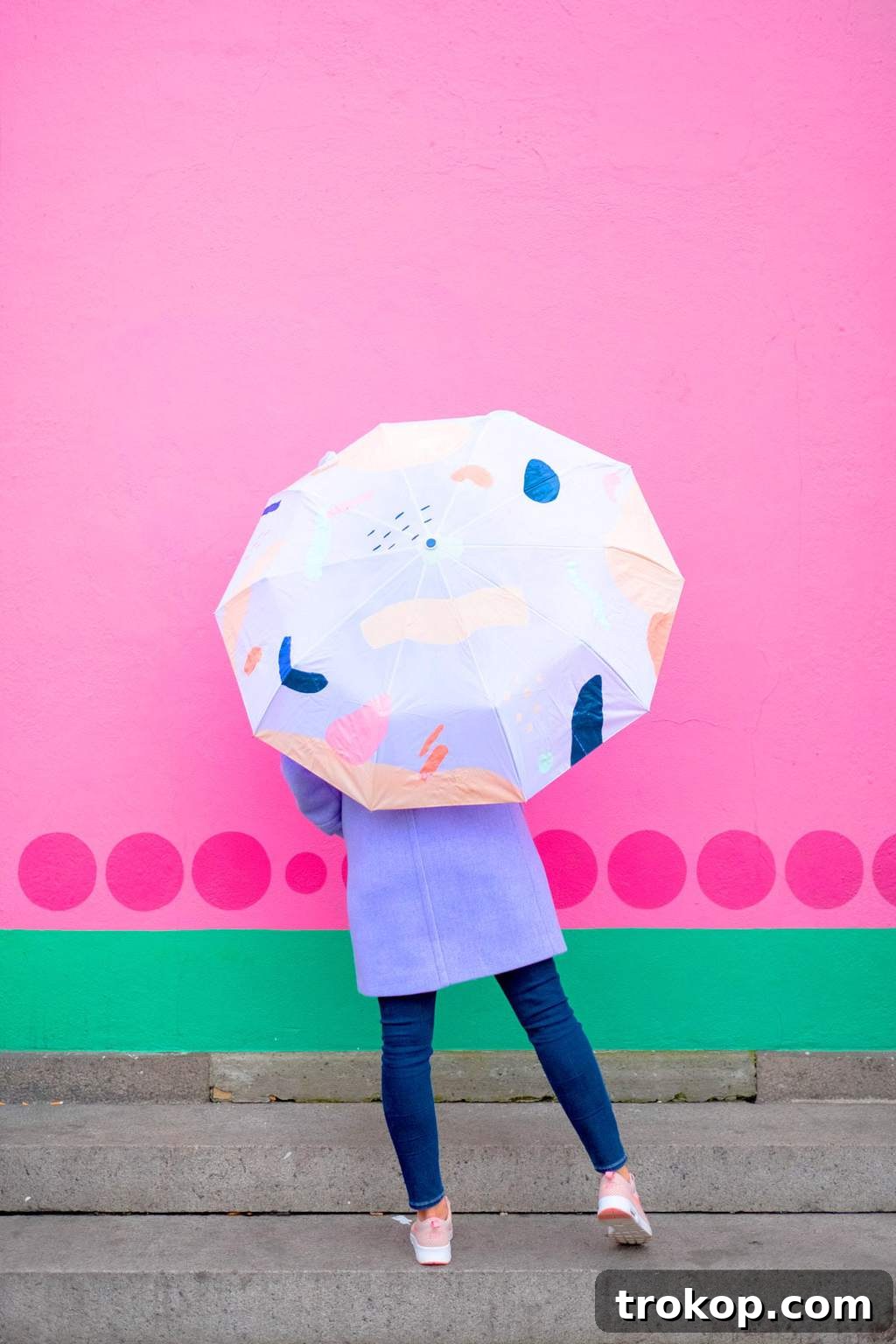
DIY Painted Umbrella: Unleash Your Creativity with Abstract Designs
Are you ready to turn a mundane rainy-day necessity into a vibrant, personalized masterpiece? Our comprehensive guide will show you exactly how to create a unique and colorful accessory with this DIY Painted Umbrella idea! Forget boring, plain umbrellas; learn how to transform a simple canvas into a stunning work of art using bold abstract shapes and an explosion of colors. This project is not just about staying dry; it’s about making a statement, embracing your creativity, and adding a splash of joy to even the gloomiest weather. Perfect for elevating your personal style, crafting a thoughtful, one-of-a-kind gift, or simply enjoying a relaxing and rewarding craft session.
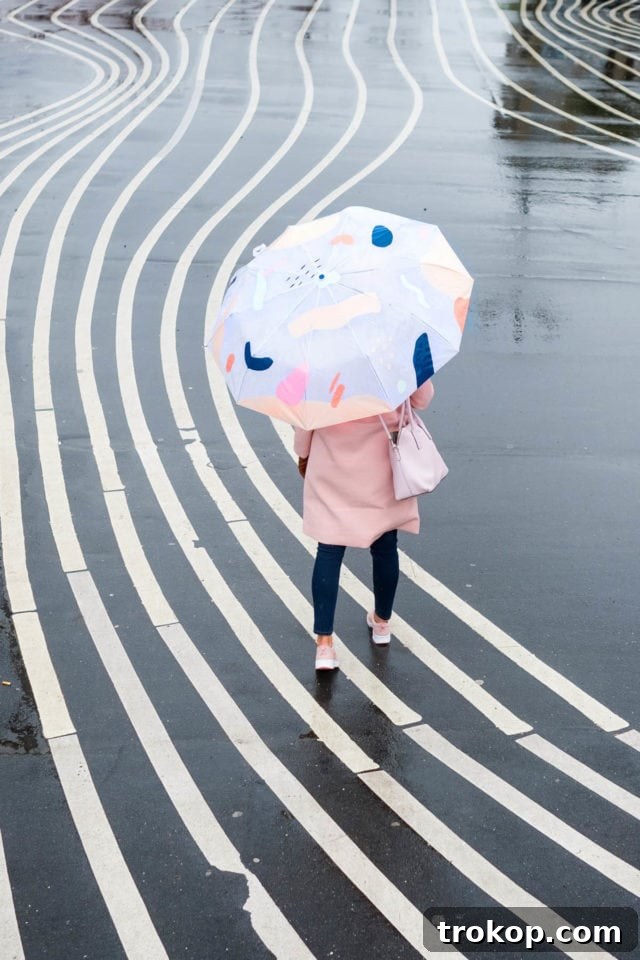
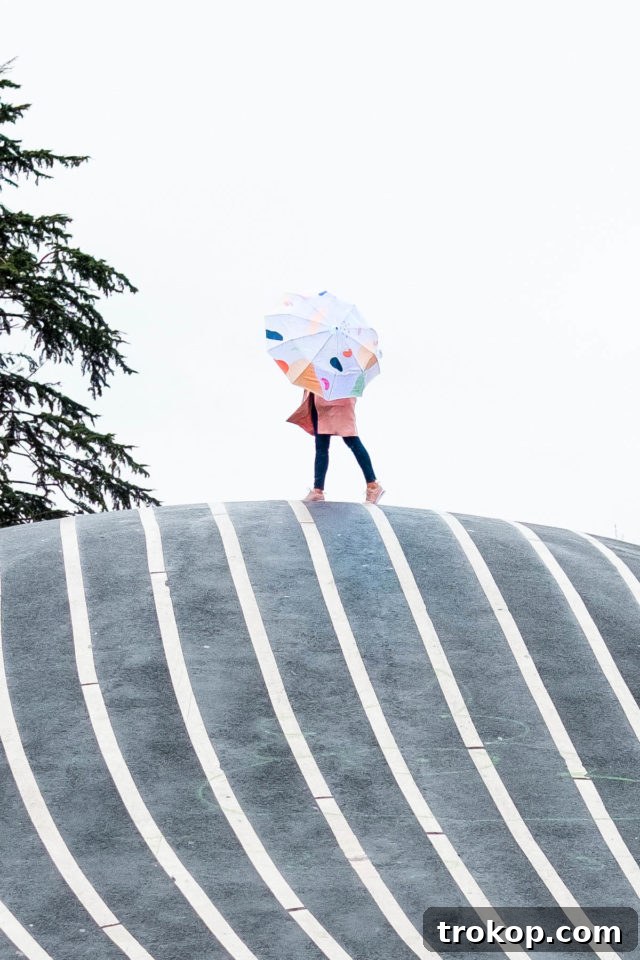
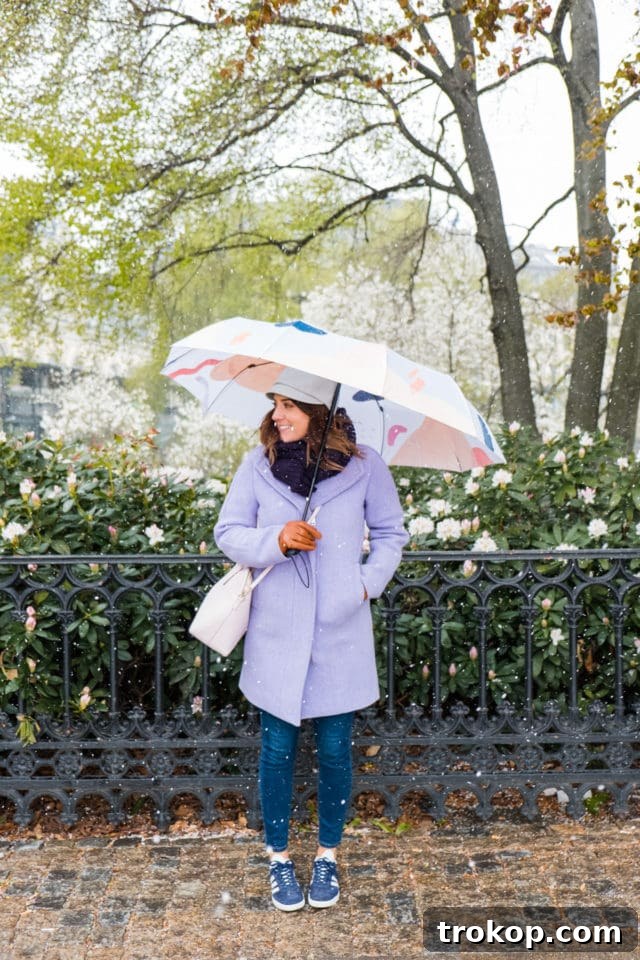
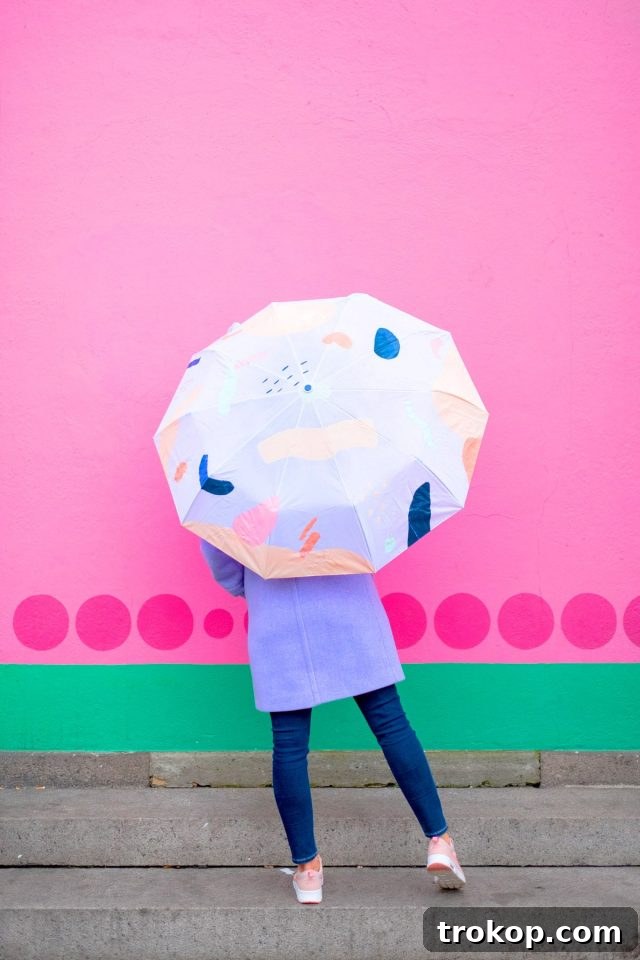
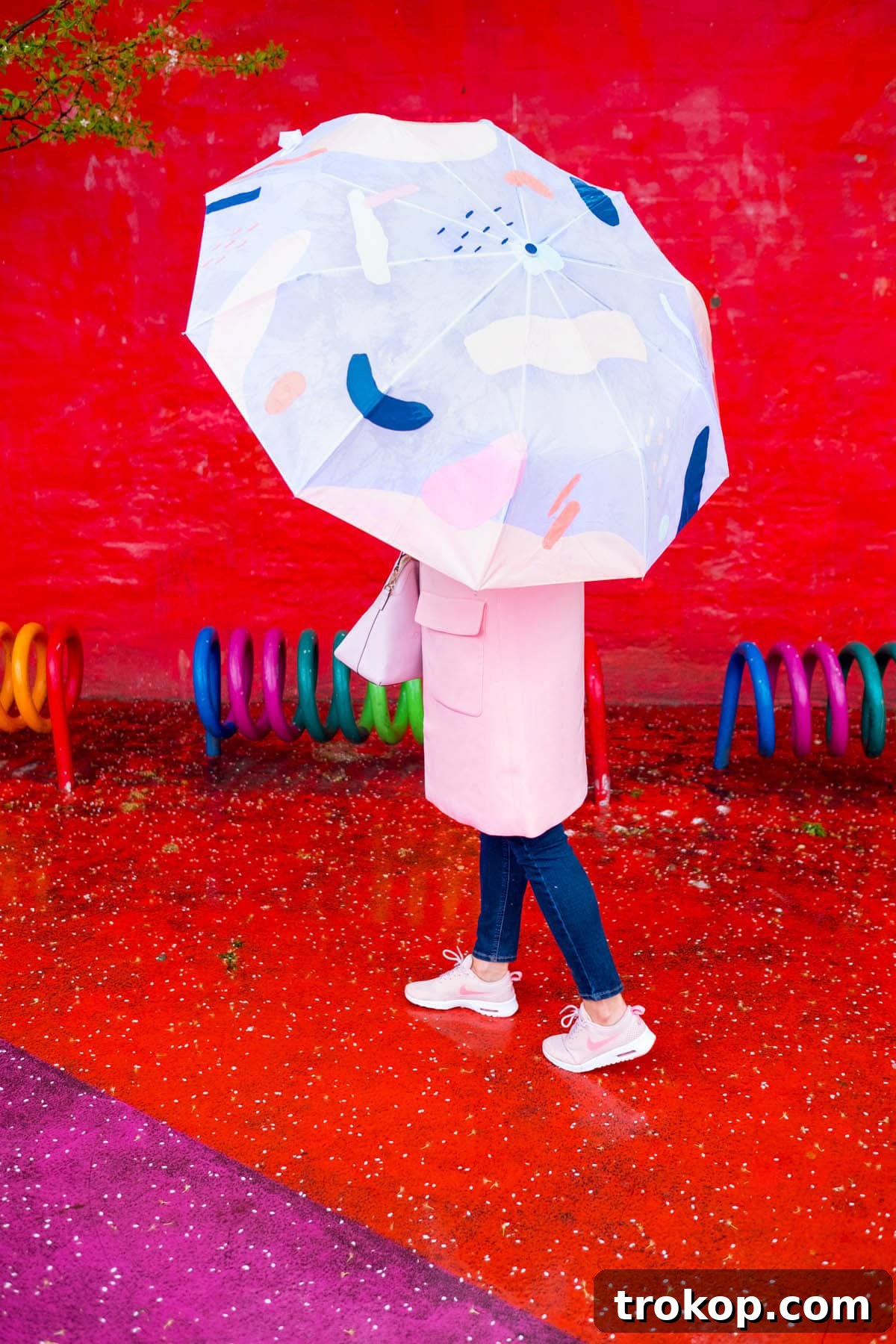
We’re taking our obsession with vibrant shapes and personal touches to an entirely new level with this DIY Painted Umbrella. Imagine strolling through a city, rain or shine, with an accessory that truly reflects your artistic spirit. This project demonstrates how you can effortlessly transform an ordinary umbrella into a unique work of art using hand-painted abstract designs. Our inspiration even accompanied us on a recent Scandinavian adventure during our Princess Cruises trip, proving that custom creations can travel the world with you!
This beginner-friendly project is ideal for anyone looking to infuse their rainy-day wardrobe with a splash of color or seeking to craft a truly thoughtful and distinctive gift for a loved one. With just a few readily available supplies, a dash of imagination, and a bit of patience, you can design and create a bold, eye-catching, and vibrant umbrella that is guaranteed to capture attention and spark conversations, turning dreary days into delightful experiences.
Whether you gravitate towards a palette of bright, punchy hues or prefer the subtle elegance of a more subdued, monochromatic design, your DIY umbrella will transcend its functional purpose to become a wearable piece of art. It’s a fantastic way to add personality and a sense of playful joy to any wet weather forecast. So, gather your paintbrushes, let your creative instincts guide your hand, and embark on this enjoyable journey to craft an umbrella that is as wonderfully unique and expressive as you are!
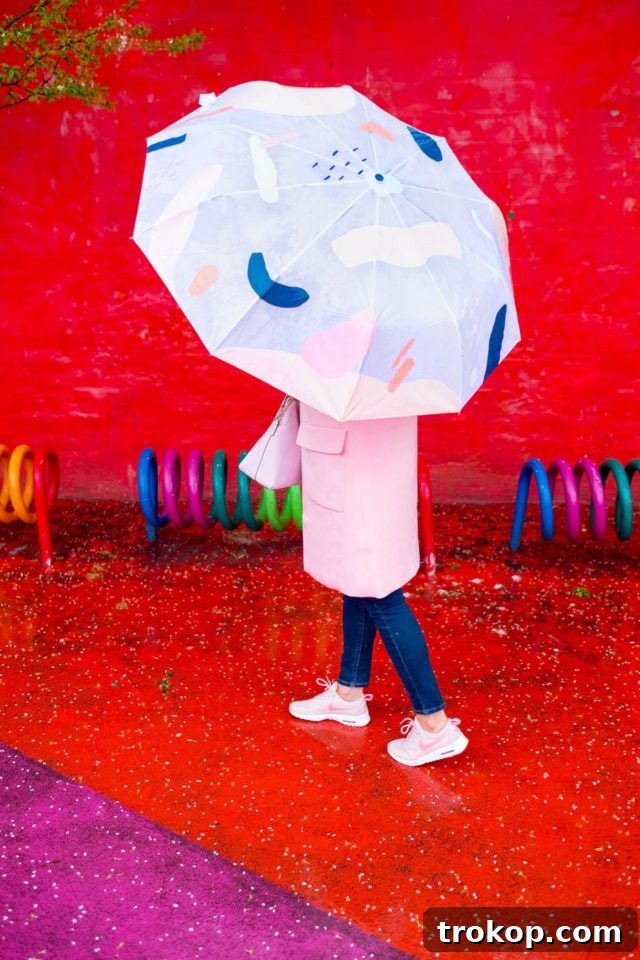
Table of Contents
Why Paint Your Own Umbrella?
In a world of mass-produced items, a hand-painted umbrella stands out as a beacon of individuality and personal expression. This DIY project offers numerous benefits beyond just having a unique accessory:
- Personalization: It allows you to create something that perfectly matches your personality, wardrobe, or even your mood. You’re not just buying an umbrella; you’re crafting a reflection of yourself.
- Creative Outlet: For many, painting is a therapeutic and enjoyable activity. This project offers a fantastic opportunity to unwind, experiment with colors and shapes, and unleash your inner artist, regardless of your skill level.
- Unique Gift Idea: A custom-painted umbrella makes an incredibly thoughtful and memorable gift. Imagine the delight of a friend or family member receiving an item specifically designed with their favorite colors or patterns in mind.
- Sustainability and Upcycling: Breathe new life into an old, plain umbrella that might otherwise be discarded. It’s a wonderful way to practice mindful consumption and reduce waste.
- Cost-Effective Style: Creating your own designer-look umbrella can be significantly more affordable than purchasing a high-end, uniquely patterned one from a boutique.
- Conversation Starter: Prepare to receive compliments and questions! Your hand-painted umbrella is sure to be a conversation starter, allowing you to share your creative story.
Choosing the Perfect Umbrella for Painting
The foundation of your DIY masterpiece is the umbrella itself. While almost any umbrella can be painted, selecting the right one can make a significant difference in the ease of the process and the final outcome:
- Color: Start with a plain, light-colored umbrella to ensure your painted designs truly pop. A white umbrella, like the one we chose, provides the cleanest canvas for vibrant colors. Light grey or pastel umbrellas can also work beautifully. If you prefer a darker umbrella, such as navy or black, opt for highly pigmented or metallic fabric paints to ensure visibility and contrast.
- Material: Most umbrellas are made from polyester or nylon, which are excellent surfaces for fabric paints. Avoid umbrellas with a heavy water-repellent coating that might prevent the paint from adhering properly. A quick test on an inconspicuous spot (like under a flap) can confirm paint adhesion.
- Type:
- Stick Umbrellas: Often larger and more stable, providing ample surface area for intricate designs. Their fixed structure can make them easier to paint when partially open.
- Compact/Folding Umbrellas: More portable, but their smaller size and numerous folds might make painting more challenging, especially with elaborate patterns. Simple, bold shapes work best here.
- Clear Umbrellas: Offer a unique opportunity for transparent or translucent paint effects, creating a stained-glass look when light shines through.
- Condition: Ensure your chosen umbrella is clean, dry, and free from any rips or damage. Any dirt or residue could affect paint adhesion.
Essential Materials and Tools Needed for Your Project
Gathering the right supplies is crucial for a successful and enjoyable DIY painted umbrella project. Investing in quality materials will ensure your artistic efforts are durable and long-lasting, even against the elements.
Equipment
-
Paint brushes: Opt for foam brushes or extra-soft bristle brushes to achieve smooth, even coverage and minimize visible brushstrokes. These types of brushes help prevent rough patches on the fabric that can occur with stiffer bristles. Consider having a variety of sizes for different details.
-
Drop cloth or newspaper: Essential for protecting your workspace from paint splatters.
-
Paper towels or rags: For cleaning brushes and wiping up any mistakes immediately.
-
Water container: For rinsing brushes between colors.
-
Pencil (optional): For lightly sketching your design before painting.
-
Palette or old plate: For mixing and holding paints.
Materials
- 1 Plain Umbrella — We recommend starting with a light-colored umbrella, such as white, to make your chosen colors truly vibrant.
- High-Quality Fabric Paints — This is where the magic happens! Choose a selection of colors that inspire you for a truly personalized look. We highly recommend investing in high-quality fabric paint, such as Speedball, for superior durability and fade resistance. Unlike cheaper alternatives, these paints are formulated to withstand exposure to rain and varying weather conditions without cracking, peeling, or washing away. While this isn’t a sponsored recommendation, our personal experience has taught us the value of investing in good quality – we learned the hard way that cheap paint just doesn’t last on an umbrella!
- Fabric Sealant Spray (optional) — For an added layer of protection and enhanced durability, particularly if you live in a frequently rainy climate, consider using a fabric sealant spray after your paint has fully dried. This extra step helps to safeguard your beautiful design from fading and water damage over time.
This project is remarkably beginner-friendly and does not demand advanced artistic skills. The primary consideration for success lies in selecting the right quality paint and finding an umbrella with a suitable surface. Once these foundational elements are in place, the creative process is as straightforward and enjoyable as designing bold, free-form, abstract shapes!
Step-by-Step Guide: How to Make a DIY Painted Umbrella
Ready to transform your plain umbrella into a personalized work of art? Follow these simple steps to bring your abstract design to life.
1. Prepare Your Workspace
Setting up your area correctly is the first step to a smooth painting process. Choose a clean, flat surface that offers ample space to fully spread out your umbrella. Lay down a drop cloth, old newspapers, or a plastic sheet to thoroughly protect your floors and furniture from any accidental paint splatters. Partially open the umbrella, ensuring the fabric panels are taut but still easily accessible from all angles. This tension will help prevent the paint from bleeding or wrinkling.
2. Plan Your Design and Color Palette
Before dipping your brush, take a moment to visualize your creation. Decide on the abstract shapes you want to incorporate – perhaps simple circles, flowing squiggles, dynamic bold stripes, gentle wavy lines, or an intriguing mix of geometric forms. Consider your color palette: do you want a vibrant, contrasting look or a more harmonious, analogous scheme? If you prefer a guide, lightly sketch your design onto the umbrella fabric using a pencil. For a more spontaneous and organic feel, you can confidently dive straight into painting.
3. Begin Painting with Your First Color
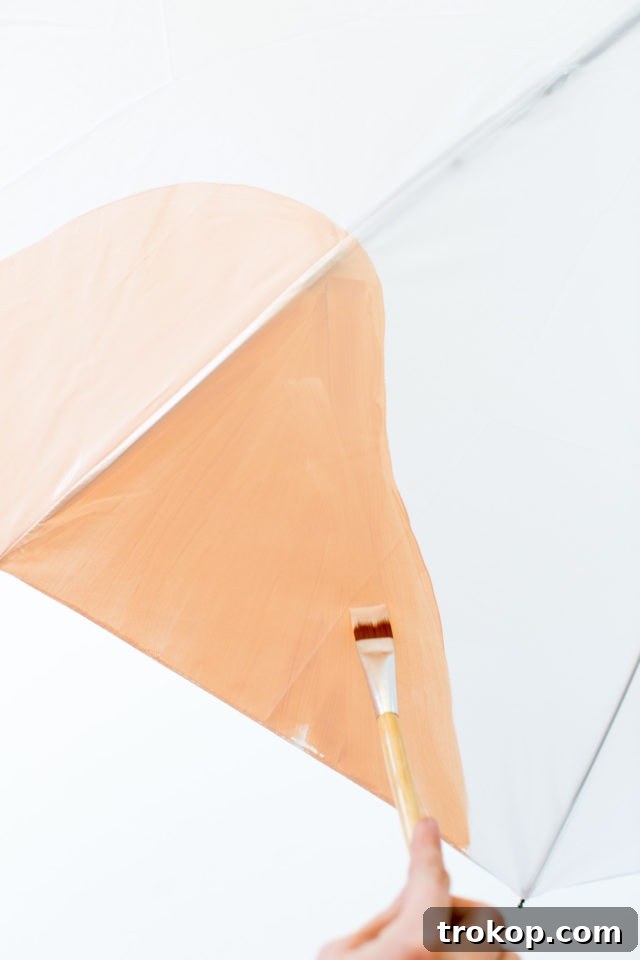
Start with one chosen color and carefully begin filling in your planned shapes. Utilize foam or soft-bristle brushes to achieve smooth, even coverage and minimize the appearance of brushstrokes. Apply the fabric paint in thin, consistent layers. If you desire greater opacity or a more intense color, allow each layer to dry completely before applying subsequent coats. Remember, patience is key: it’s always easier to add more paint than it is to remove excess.
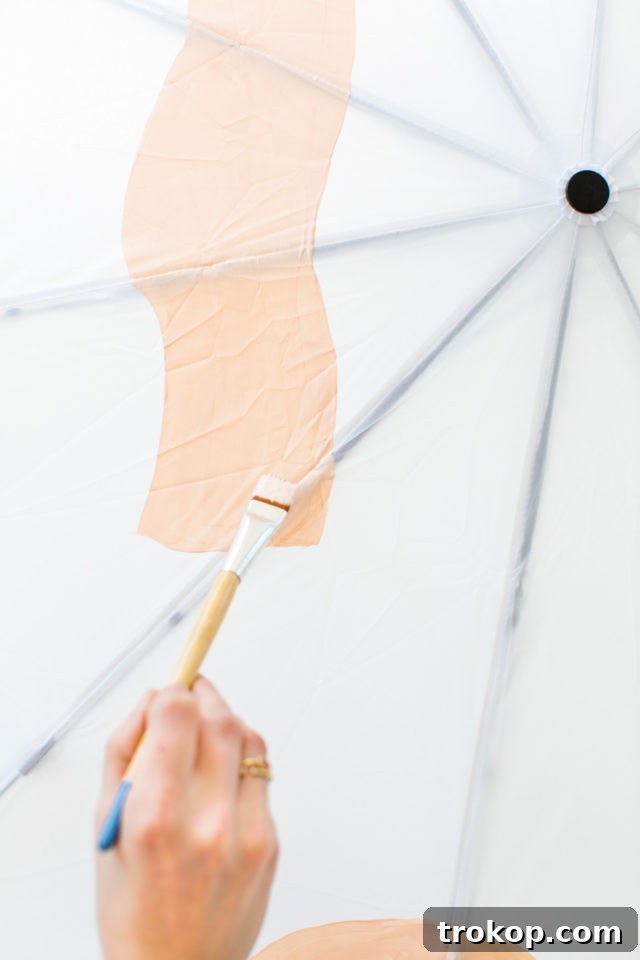
4. Add More Colors and Layers
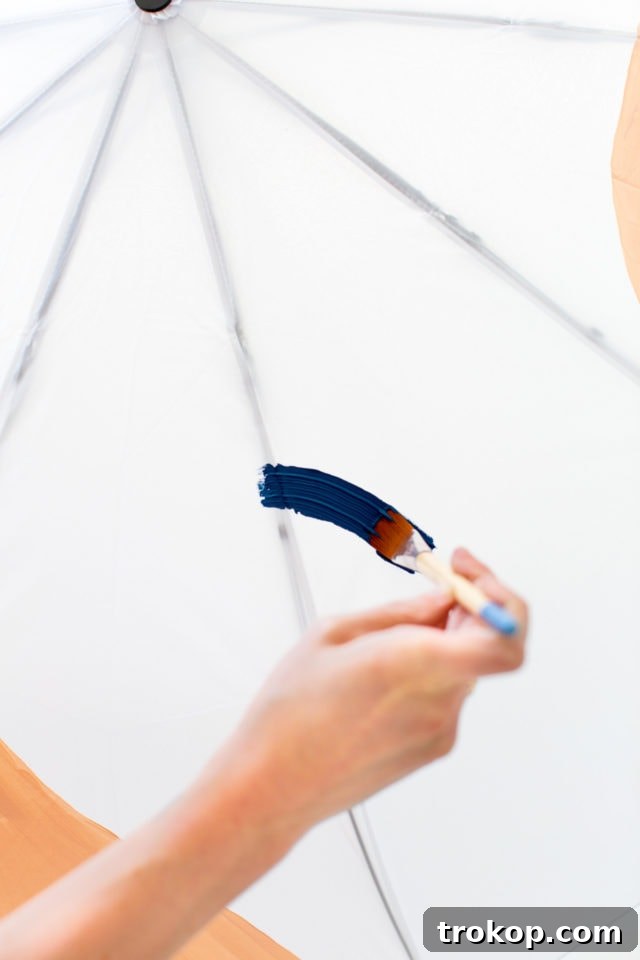
Once your initial color layer has dried completely, switch to your next chosen color. Continue to add new shapes, patterns, or fill in existing outlines around the umbrella. Strive for a balanced composition across each panel of the umbrella for a cohesive and aesthetically pleasing overall look. However, don’t get too caught up in achieving absolute perfection; abstract designs are celebrated for their freedom, spontaneity, and unique, imperfect charm. Let your creativity flow and enjoy the process of building up your artwork.
5. Allow the Paint to Dry Completely
This is a critical step for the longevity of your design. After you have finished applying all your paint, it is absolutely essential to allow the umbrella to dry completely. We recommend a minimum drying period of 24 hours, or even longer depending on the humidity and the thickness of your paint layers. This extensive drying time ensures that the fabric paint fully adheres to the umbrella’s material and cures properly, preventing any smudging, running, or cracking when your umbrella eventually encounters water.
6. Optional: Apply a Fabric Sealant for Extra Durability
For an enhanced level of protection and increased durability, especially if you reside in an area prone to frequent rain or if you plan to use your umbrella often, consider applying a high-quality fabric sealant spray. This optional step acts as a protective barrier, helping to preserve the vibrancy of your artwork and preventing it from fading or washing away over time. Ensure the paint is fully dry before applying the sealant according to the product’s instructions.
Expert Tutorial Notes and Pro Tips for Success
Maximizing the lifespan and visual appeal of your DIY painted umbrella involves a few key considerations and techniques. These expert tips will help you achieve the best possible results:
- Invest in High-Quality Fabric Paint: This cannot be stressed enough. Always use fabric paint specifically designed to be water-resistant and durable for outdoor use. Cheaper alternatives are highly likely to fade, crack, or wash away after just a few encounters with rain, undermining all your creative effort. Look for brands known for their textile paints’ longevity and weather resistance.
- Strategic Color Selection: If you’re using a white or very light-colored umbrella as your base, we highly recommend opting for more saturated, bold, or even fluorescent colors. White fabric reflects a significant amount of light, which can sometimes mute pastel or lighter hues, making them less noticeable. Alternatively, painting a dark umbrella (like navy or black) with pastel, metallic, or neon colors creates a striking and elegant contrast.
- Embrace Simple Designs: Remember, you don’t need extensive drawing skills to create a stunning umbrella. Simple, abstract shapes such as circles, flowing lines, organic squiggles, or broad waves are not only easier to execute but also tend to look fantastic and dynamic on the curved panels of an umbrella. Keeping designs straightforward also helps prevent excessive paint buildup, which could make the fabric stiff and prone to cracking when the umbrella is opened and closed.
- Explore Different Pattern Ideas: The beauty of abstract art is its freedom. Don’t feel pressured for perfection. If you’re looking for even simpler and easier design inspiration, consider styles like confetti patterns, as seen in our DIY confetti placemats, or a more structured geometric approach reminiscent of our geometric accent wall. Stripes, polka dots, or even a splatter paint effect can yield surprisingly chic results.
- Apply Thin, Even Layers: Thick layers of paint are more susceptible to cracking and peeling, especially on flexible fabric. Always apply your fabric paint in thin, even coats. If you need more color intensity or opacity, allow the first layer to dry completely before adding a second or even third thin coat. This layering technique ensures flexibility and adherence.
- Practice Makes Perfect (or at least better!): If you’re uncertain about your design concept or want to experiment with brushstrokes, try sketching and painting a few ideas on a scrap piece of fabric or even thick paper first. This preliminary practice can help you refine your shapes, color combinations, and overall vision before committing to the umbrella itself.
- Keep the Umbrella Taut While Painting: To ensure smooth application and prevent paint from pooling or wrinkling, slightly open the umbrella. Each section you are working on should be taut, but avoid stretching it fully open to its maximum extent. A slightly relaxed tension prevents the paint from cracking prematurely when the umbrella is later opened and closed repeatedly.
- Work in a Well-Ventilated Area: Fabric paints can have fumes, so ensure you are working in a space with good air circulation.
- Patience During Drying: Resist the urge to fold or use your umbrella before the paint has completely cured. Premature handling can lead to smudges, cracks, or sticky sections.
Design Inspiration and Creative Ideas
Abstract art offers boundless possibilities, making it perfect for personalizing your umbrella. If you’re looking for a starting point or want to explore different aesthetics, consider these ideas:
- Geometric Abstraction: Think squares, triangles, circles, and lines in overlapping or interlocking patterns. Play with different sizes and angles to create a dynamic look.
- Organic Shapes: Embrace free-flowing, natural forms like waves, blobs, swirls, or leaf-like patterns. These can create a softer, more fluid appearance.
- Splatter Paint Effect: For an energetic and modern look, gently splatter contrasting colors over a base coat. This spontaneous technique yields vibrant results and requires minimal precision.
- Ombre or Gradient: Blend two or more colors seamlessly from one panel to the next, or within a single shape, to create a beautiful gradient effect.
- Minimalist Designs: Sometimes less is more. A single, bold shape or a few strategically placed lines can be incredibly impactful and chic.
- Thematic Designs: While abstract, you can still evoke a theme. Think ocean-inspired blues and greens with wave-like patterns, or a vibrant garden with floral-like abstract bursts.
- Color Blocking: Divide your umbrella panels or sections into large blocks of solid, contrasting colors for a striking contemporary style.
Caring for Your Hand-Painted Umbrella
To ensure your custom creation remains beautiful and functional for many rainy seasons to come, proper care is essential:
- Thorough Drying: After each use in the rain, make sure to open your umbrella fully and allow it to air dry completely before folding it away. This prevents mold, mildew, and potential damage to the paint.
- Gentle Cleaning: If your umbrella gets dirty, gently wipe the painted areas with a soft, damp cloth. Avoid harsh scrubbing or abrasive cleaners, as these can lift or damage the fabric paint.
- Storage: Store your umbrella in a cool, dry place away from direct sunlight when not in use. Prolonged exposure to intense UV rays can cause even high-quality fabric paints to fade over time.
- Avoid Folding While Wet: Never fold or store your umbrella while the fabric (or paint) is still wet. This can cause colors to bleed or stick together, potentially ruining your design.
- Handle with Care: While durable, fabric paint is still an applied layer. Be mindful when opening and closing the umbrella, avoiding excessive force or scraping painted surfaces against rough objects.
Conclusion: Embrace Your Unique Style
Crafting your own DIY painted umbrella is more than just a craft project; it’s an invitation to inject personality and artistic flair into your everyday life. With this guide, you now have all the tools, tips, and inspiration needed to transform a simple accessory into a vibrant expression of your unique style. From choosing the perfect plain umbrella to selecting high-quality fabric paints and applying expert techniques, every step is designed to be enjoyable and rewarding. Whether you’re making a statement piece for yourself or designing a heartfelt gift, your hand-painted umbrella is sure to brighten up even the greyest of days. So, don’t let the rain dampen your spirits – instead, let it be an opportunity to showcase your creativity! Happy painting!
DIY Painted Umbrella with Abstract Shapes
1 hour
1 day
1 day 1 hour
Instructions Summary
-
Prepare your workspace by laying down protection and partially opening the umbrella.
-
Plan your abstract design and chosen colors, sketching lightly if desired.
-
Begin painting shapes with your first color using thin, even layers, allowing each layer to dry.
-
Add subsequent colors and patterns, ensuring previous layers are dry.
-
Allow the entire umbrella to dry completely for at least 24 hours.
-
Optional: Apply a fabric sealant for extra durability and protection.

More Inspiring Painting Ideas from Our Collection
Painting is a wonderful way to express creativity and relieve stress. If you’ve enjoyed personalizing your umbrella, explore more easy and fun painting projects from our favorites below:
33 Easy DIY Pumpkin Painting Ideas
Create festive and unique decorations with these pumpkin painting ideas, perfect for fall and Halloween…
Continue Reading33 Easy DIY Pumpkin Painting Ideas
DIY Balloon Cake Topper & Cake Painting Tutorial
Add a touch of whimsy to your cake with a customizable balloon garland cake topper and learn tips for painting frosting…
Continue ReadingDIY Balloon Cake Topper & Cake Painting Tutorial
Cool Boys Bedroom Paint Ideas for Every Personality
Create a cool and cozy ambiance in your son’s room with these inspiring paint ideas tailored for every personality…
Continue ReadingCool Boys Bedroom Paint Ideas for Every Personality
How to Make a Watercolor Cake
Learn how to create a stunning and edible watercolor cake, perfect for any celebration or special occasion…
Continue ReadingHow to Make a Watercolor Cake