
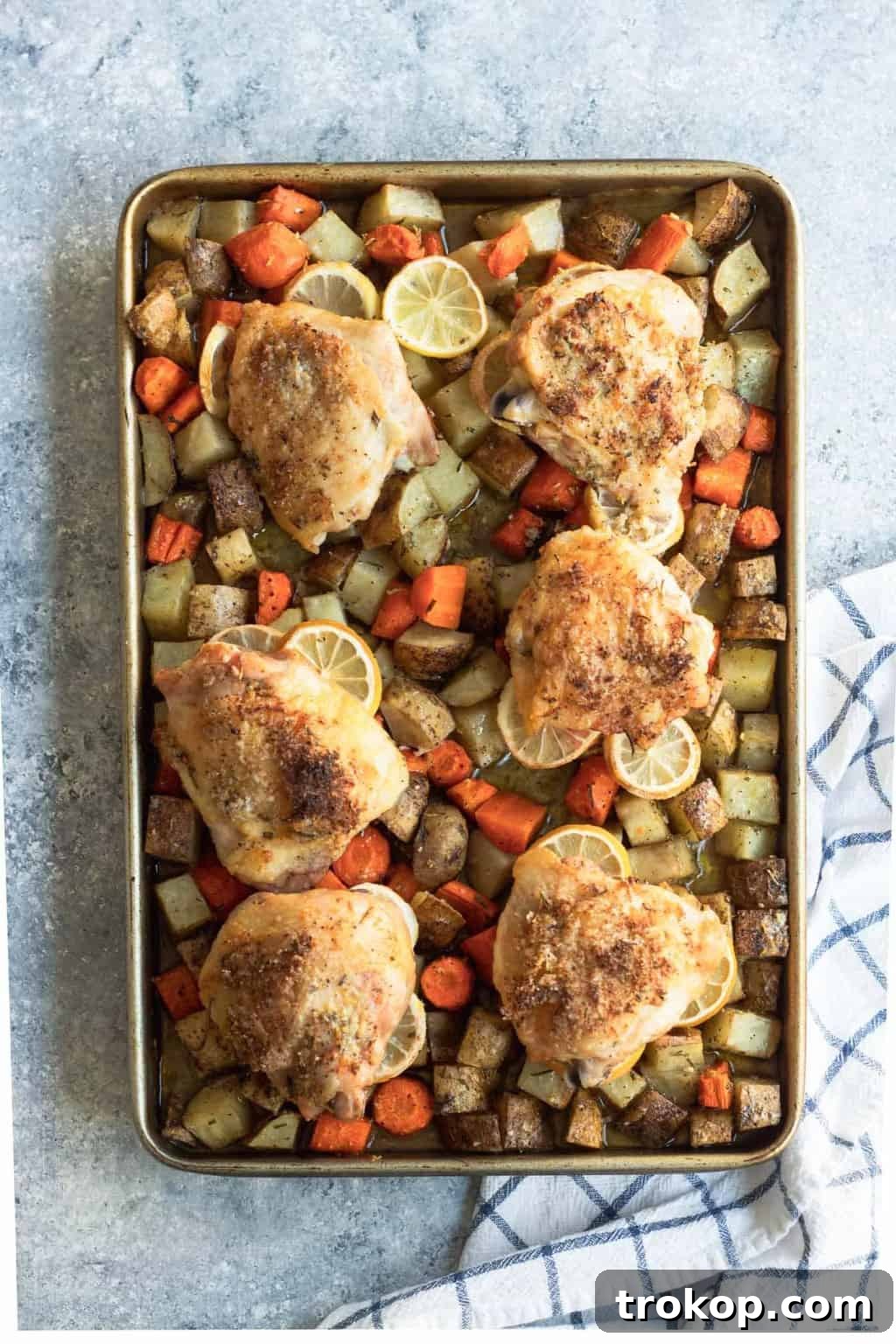
In our increasingly busy lives, finding time for wholesome, delicious meals can feel like a constant challenge. Between work, school, and endless commitments, easy weeknight dinners that don’t compromise on flavor or nutrition are an absolute lifesaver. This is precisely where the magic of a Sheet Pan Lemon Rosemary Chicken dinner comes in – a culinary hero designed to simplify your evenings and delight your taste buds. This effortless recipe brings together tender chicken and vibrant vegetables, all roasted to perfection on a single baking sheet, promising a healthy and satisfying meal with minimal fuss and even less cleanup.
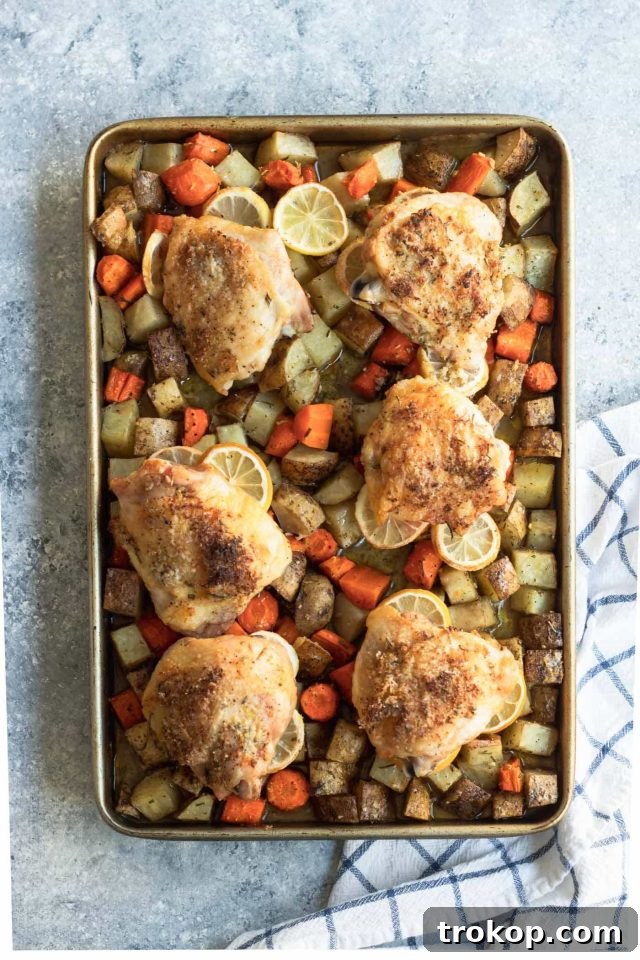
As academic schedules and extracurricular activities ramp up, the demand for straightforward dinner solutions becomes paramount. This Sheet Pan Lemon Rosemary Chicken recipe stands out as an ideal weeknight dinner idea, quickly becoming a staple in many households. Its beauty lies not just in its incredible flavor profile, but also in its unparalleled convenience. Imagine a meal that only requires a brief 20 to 30 minutes of hands-on preparation, followed by a leisurely hour in the oven, and then – voilà! A complete, balanced, and mouth-watering meal is ready to be savored.
Beyond the ease of preparation, one of the most compelling advantages of this one-pan dinner is the minimal amount of dirty dishes it generates. Who truly enjoys spending their precious evening hours scrubbing pots and pans? This recipe features your main course and side dishes cooking harmoniously together, reducing kitchen chaos to an absolute minimum. It’s a healthy, intensely flavorful, and truly filling meal that even the most discerning eaters will eagerly embrace. Take it from a seasoned home cook; when this Lemon Rosemary Chicken is on the menu, everyone at the table sits up and digs in!
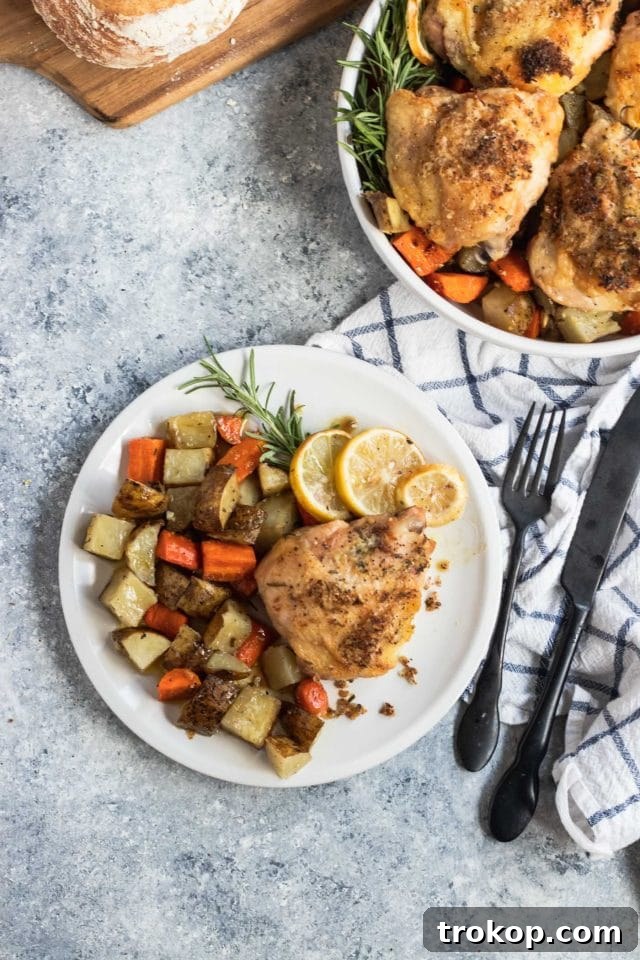
Table of Contents
Benefits of Sheet Pan Dinners
If you’re seeking a meal that is genuinely simple, incredibly delicious, and inherently healthy, this Lemon Rosemary Chicken recipe might be the perfect answer for ensuring full and happy bellies around your table. The genius of sheet pan or one-pan dinners lies in their fundamental design: all ingredients cook together harmoniously on a single baking sheet. This ingenious approach dramatically streamlines both the cooking and, perhaps even more importantly, the cleanup process. Imagine the joy of easily transferring your entire meal from the oven to the table, knowing that only one main piece of cookware will need washing!
Beyond the immediate convenience, sheet pan dinners also excel in their reheatability. This makes them an outstanding choice for meal prepping. Whether you’re feeding a bustling family and wish to double the recipe for extra portions, or you’re cooking for one or two and desire several days’ worth of healthy dinners, these meals store and reheat beautifully. To make cleanup even faster and virtually effortless, consider lining your baking sheet with aluminum foil or parchment paper. This simple step creates a barrier, preventing any savory juices or oils from clinging to your pan, turning post-dinner chores into a mere formality. Once your pan is prepared, you’ll want to move on to crafting that aromatic spice mix that brings this dish to life.
Can I Use a Baking Dish Instead of a Baking Pan?
While the recipe specifically calls for a baking pan, typically made of aluminum or stainless steel, you do have some flexibility. If you possess an aluminum baking dish, it can certainly serve as a suitable alternative. However, it’s crucial to avoid using baking dishes made from glass, stoneware, or porcelain for this particular recipe. These materials have different thermal properties; they do not conduct heat as quickly or as evenly as metal pans. As a result, your rosemary chicken thighs and vegetables will not cook at the same rate, potentially leading to unevenly cooked ingredients or requiring significantly longer cooking times. For the best results and adherence to the recipe’s timing, a metal baking sheet or aluminum roasting pan is highly recommended to ensure everything cooks efficiently and to perfection.
Tips for Prepping Fresh Rosemary Seasoning
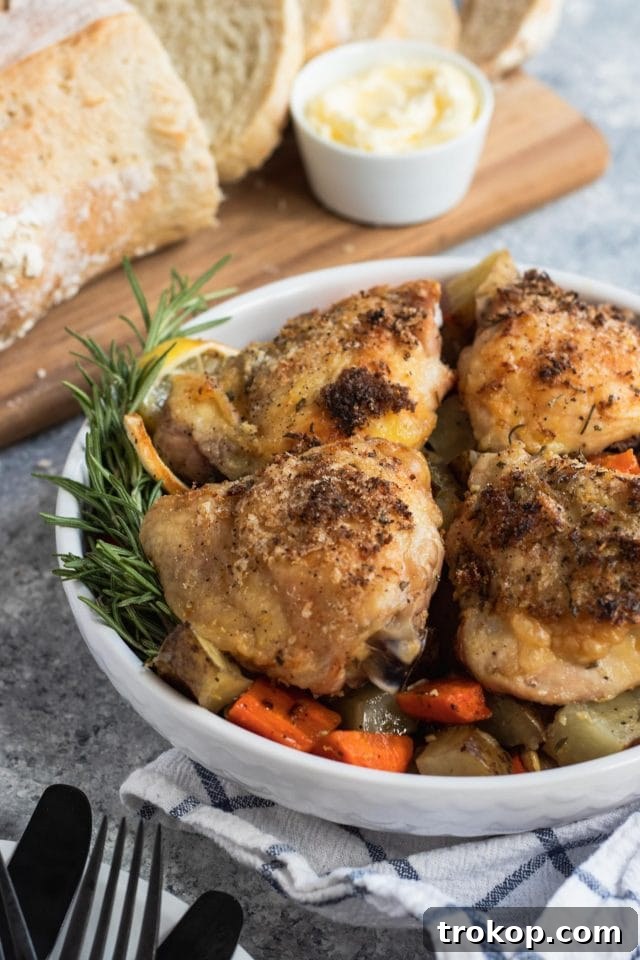
Rosemary is an integral component of this dish, infusing it with its distinct aromatic and slightly piney flavor. While the herb adds incredible depth, preparing fresh rosemary can sometimes seem a bit tedious. Here’s a professional tip to quickly and efficiently remove fresh rosemary leaves from their woody stalks:
- Hold the top end of the rosemary sprig firmly in one hand.
- With your other hand, close all your fingers around the stalk, starting near the top where you’re holding it.
- Firmly pull your closed hand downwards towards the plant end of the stalk. Essentially, you are pulling the leaves in the opposite direction of their natural growth. This action will strip the leaves cleanly off the stem.
Following this simple technique, you’ll be left with a bare stem and a neat pile of fragrant rosemary leaves, perfectly ready to be finely chopped for your seasoning mix. This method not only saves time but also ensures you get every bit of that wonderful herb without the hassle. Fresh herbs like rosemary also store well in the refrigerator if you wrap them in a damp paper towel and place them in an airtight container or a plastic bag, helping them stay vibrant for longer.
Can You Use Dried Spices or Pre-Made Ingredients?
While we always advocate for the unparalleled flavor and aroma that fresh ingredients bring to any dish, we understand that convenience sometimes takes precedence. If fresh rosemary isn’t readily available or if you only have dried rosemary on hand, rest assured that it will work perfectly fine for this recipe! Dried herbs tend to be more potent and concentrated than their fresh counterparts. As a general rule of thumb, if you opt for dried spices instead of fresh, use about one-third of the quantity specified. For example, if the recipe calls for 1.5 tablespoons of fresh rosemary, use approximately 0.5 tablespoons of dried rosemary.
It’s important to remember that dried spices do have a shelf life and can quickly lose their flavor and potency if left sitting in the cupboard for too long. For the best culinary results, always check the freshness of your dried spices. A quick sniff test can often tell you if they’ve lost their aromatic punch; if they don’t smell vibrant, it’s time for new ones. You certainly don’t want to miss out on that beautiful rosemary flavor in this dish!
Similarly, when it comes to garlic, mincing fresh cloves undoubtedly elevates the flavor profile, creating those irresistible browned, savory bits once baked. However, in those moments when time is truly of the essence, opting for pre-minced garlic is a perfectly acceptable shortcut. There’s absolutely no shame or judgment here – using pre-minced garlic still delivers great flavor and can be a fantastic time-saver, allowing you to get a wholesome meal on the table even on the busiest of nights.
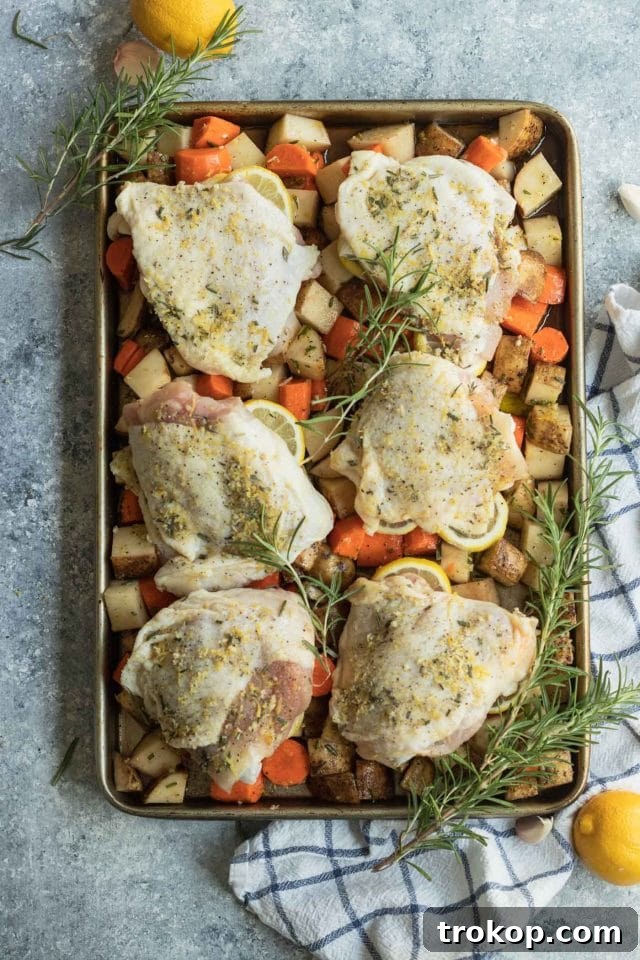
How to Zest a Lemon for a Baked Lemon Chicken Recipe
Lemon zest is a powerful flavor enhancer derived from the outermost colorful layer of the lemon peel. This thin, fragrant layer contains potent essential oils that provide a bright, concentrated citrus flavor without the acidity of the juice. To properly zest a lemon for your baked chicken recipe, you’ll need a microplane grater or a fine grater with small, sharp holes. The key is to remove only the yellow part, avoiding the bitter white pith underneath.
To zest, hold your grater firmly and gently rub the lemon against the rough edges, moving it away from you. Rotate the lemon frequently, ensuring you’re only grating the yellow skin. Once you see any white pith, move to a new section of the lemon. The rind’s oils are what carry that incredible aroma and taste, so make sure to take full advantage of all that vibrant flavor! This method ensures a pure, bright lemon essence that perfectly complements the savory rosemary.
Once you’ve collected your finely grated lemon zest, it blends seamlessly with the salt, pepper, and rosemary. This beautiful spice blend will then adhere easily to the chicken thighs, ensuring that every piece is thoroughly coated and infused with the delicious flavors. The zesty kick of the lemon perfectly balances the earthy notes of the rosemary, providing a less acidic but equally impactful citrus brightness compared to using lemon juice, which can sometimes make chicken too tart. This balance of flavors is what makes this sheet pan chicken truly exceptional.
What Sides to Serve with Lemon Rosemary Chicken
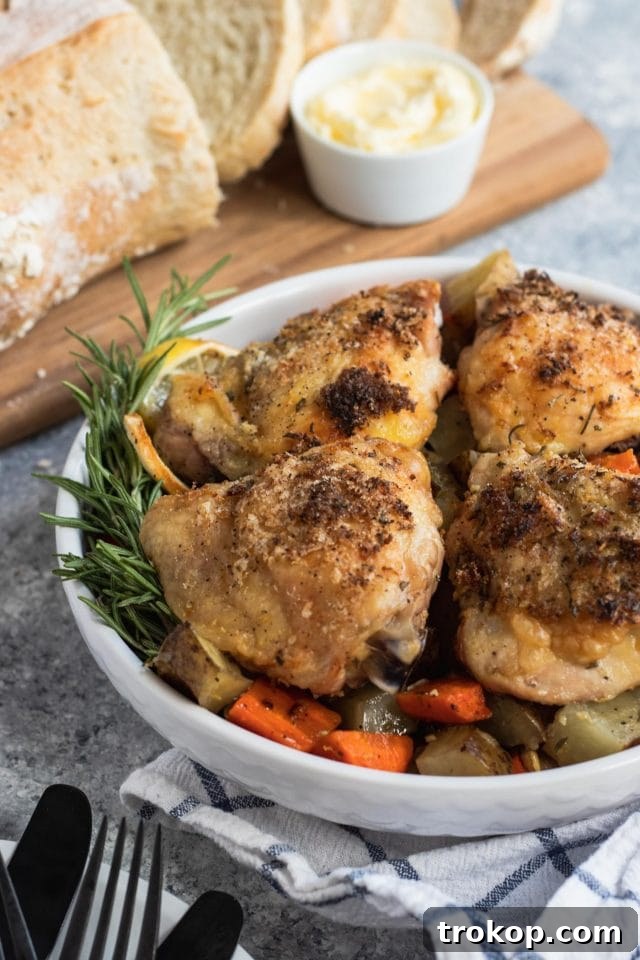
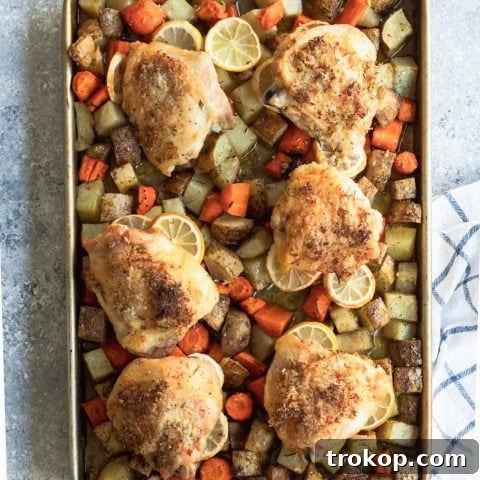
One of the many joys of this sheet pan recipe is its inherent versatility, especially when it comes to side dishes. For the version pictured in this recipe, we’ve chosen a classic combination of regular white potatoes and carrots, chopped into approximately 1-inch pieces. This ensures they cook evenly and become wonderfully tender. However, your preference truly dictates the choice of vegetables. Feel free to substitute white potatoes with red potatoes, golden potatoes, or even sweet potatoes – or perhaps a colorful mix of them all! Whichever variety you choose, the crucial step is to cut all potatoes and other root vegetables into pieces of roughly equal size. This uniformity guarantees even cooking, preventing some pieces from being undercooked and unpleasantly hard, while others become mushy.
Potatoes, particularly white varieties, tend to start browning as soon as they are cut and exposed to air. To maintain their fresh appearance and prepare them for roasting, quickly toss your chopped potatoes and carrots with a generous drizzle of extra virgin olive oil and your chosen spices. This coating protects them and ensures they roast beautifully.
While chicken and potatoes are an undeniably perfect pairing, this recipe is adaptable if you’re looking to reduce carbohydrate intake. Simply substitute the potatoes with a variety of low-carb vegetables. Excellent options include Brussels sprouts, fresh or frozen green beans, asparagus, broccoli florets, or even a flavorful bed of cauliflower florets. These alternatives still absorb the delicious rosemary-lemon flavors and roast wonderfully alongside the chicken, creating a satisfying and healthy meal tailored to your dietary needs. Just ensure all vegetables are cut to a size that allows them to cook through in roughly the same time as the chicken.
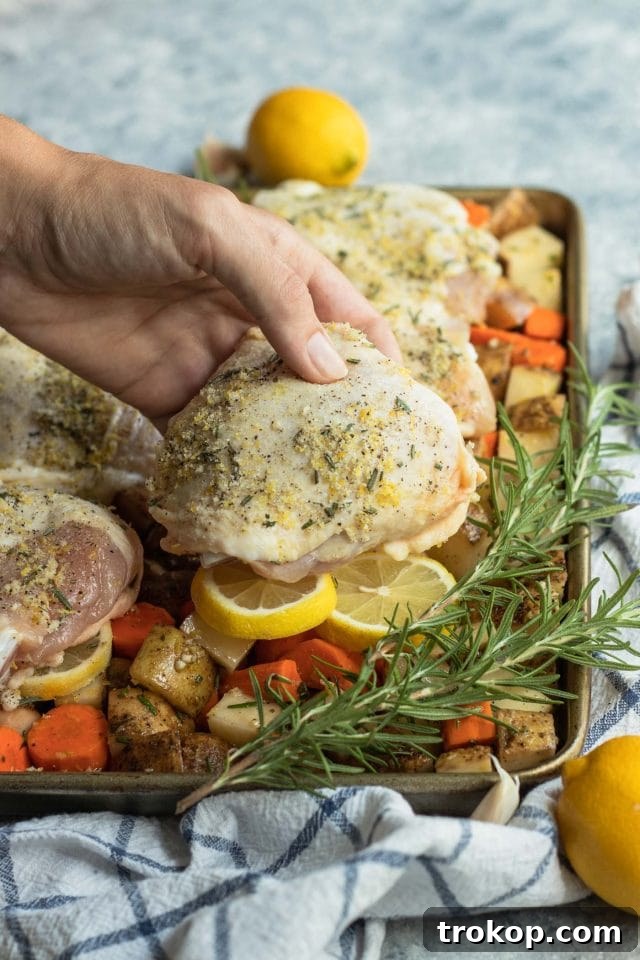
What’s the Best Chicken to Use for Sheet Pan Meals?
For sheet pan meals where you’re cooking both meat and vegetables simultaneously, the choice of chicken cut can significantly impact the final outcome. Bone-in, skin-on chicken pieces are generally ideal for this type of cooking. The bone acts as an insulator, allowing the chicken to cook more slowly and evenly compared to boneless, skinless cuts. This slower cooking process is crucial because it helps ensure that your vegetables and meat finish cooking at roughly the same time, preventing either component from being over or underdone.
We particularly recommend using bone-in, skin-on chicken thighs. Dark meat, found in thighs and drumsticks, has a higher fat content than white meat (breast meat). This natural fattiness makes dark meat far less likely to dry out during the roasting process, resulting in incredibly tender, juicy, and flavorful chicken every time. The skin also crisps up beautifully, adding a desirable texture and richness to the dish.
However, if you are monitoring your fat intake or prefer white meat, you can certainly opt for bone-in chicken breasts with the skin still on. The bone and skin will still offer some protection against drying. If you choose chicken breasts, especially larger ones, you might need to cut them in half or into more uniform pieces to ensure they cook through within the same timeframe as the vegetables. Always consider the size and thickness of your chicken pieces relative to your vegetables. Chicken’s remarkable versatility is precisely why there are so many easy chicken recipes available, allowing for endless delicious possibilities.
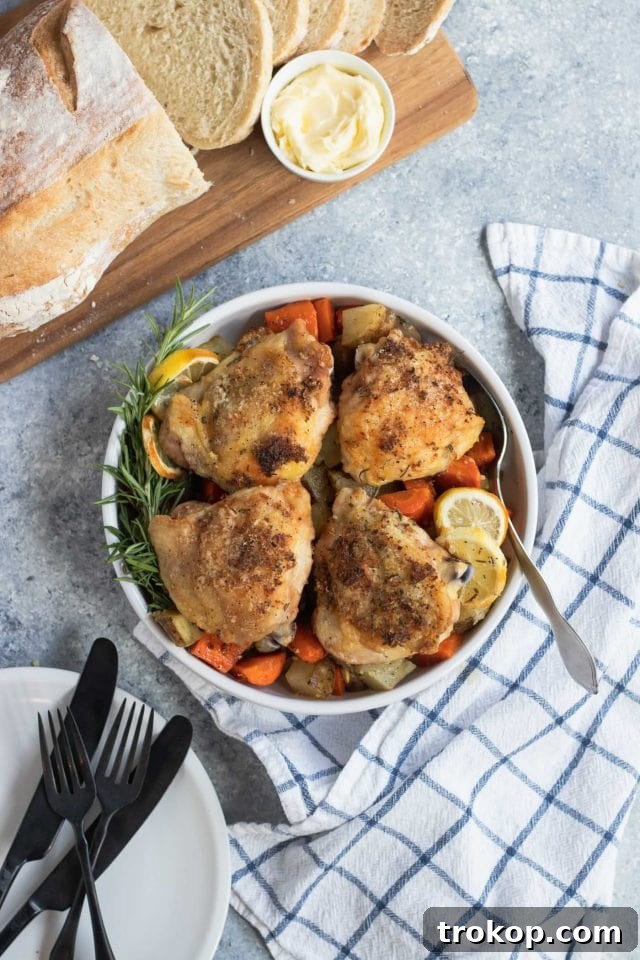
Seasoning the Sheet Pan Lemon Rosemary Chicken
The key to unlocking the incredible flavor of this Sheet Pan Lemon Rosemary Chicken lies in the seasoning technique. To infuse every bite with aromatic goodness, generously sprinkle a blend of salt, black pepper, finely chopped fresh rosemary, vibrant lemon zest, and minced garlic all over and, importantly, even under the chicken pieces. Don’t be shy with the seasoning; this bold rosemary garlic blend isn’t just fantastic for chicken, it’s also a wonderful complement to other proteins like pork or lamb!
Once your lemons have been zested, don’t discard them! Slice the zested lemons thinly and tuck these fresh lemon slices underneath the chicken pieces on the baking sheet. As they roast, these lemon slices will impart a subtle, fragrant citrus note to the chicken, keeping it moist and adding another layer of flavor. Finally, for that irresistible crispy skin, drizzle a generous amount of extra virgin olive oil over the tops of the chicken pieces. This olive oil will help the skins turn a beautiful golden brown and achieve a delightful crispness in the oven, adding a wonderful textural contrast to the tender meat.
After about an hour in the oven, or potentially as early as 50 minutes, it will be time to check on your dish. It’s essential to ensure that both the chicken and the vegetables are thoroughly cooked and perfectly tender. If you want to elevate this chicken dish even further and add a luscious, savory element, consider adding a splash of white wine or chicken broth to the pan during the last 15-20 minutes of cooking. This will create a delicious pan sauce that can be spooned over the chicken and vegetables for an extra burst of flavor and moisture.
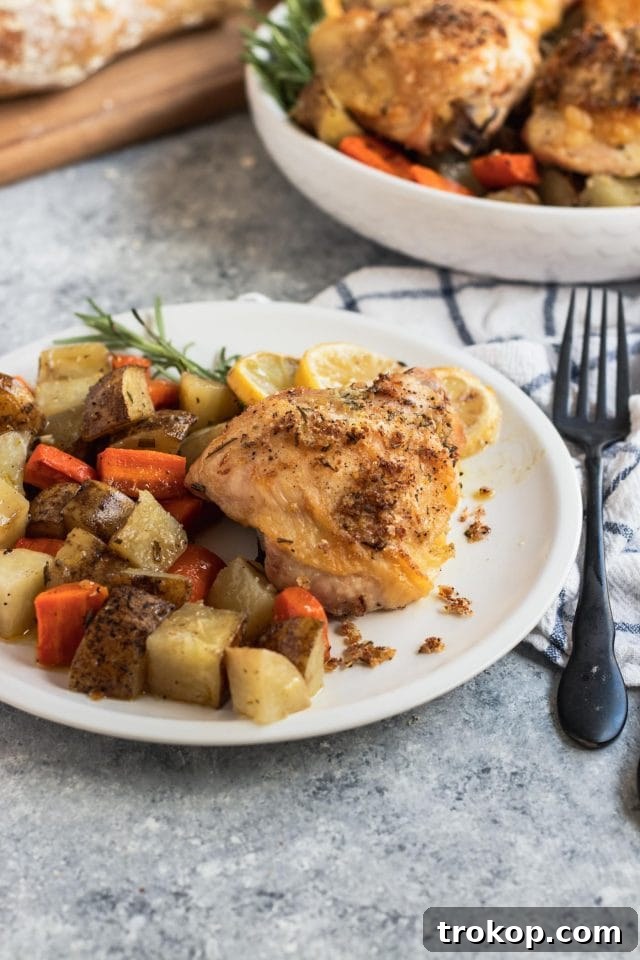
How to Tell If Your Vegetables are Fully Cooked
Ensuring your vegetables are perfectly cooked is just as important as ensuring your chicken is done. For root vegetables like potatoes and carrots, the easiest and most reliable way to check for doneness is the fork-tender test. Simply take a fork and gently pierce one of the larger pieces of potato or carrot. If the fork slides in easily without resistance, all the way through the center, it means they are tender and thoroughly cooked. They should have a slightly browned, caramelized exterior and a soft, creamy interior. If there’s still a bit of resistance, continue roasting for another 5-10 minutes and test again.
How to Tell If Your Chicken is Fully Cooked
Properly cooking chicken to a safe internal temperature is crucial for both health and taste. If you own a meat thermometer, we highly recommend using it to verify the doneness of your baked chicken thighs. Insert the thermometer into the thickest part of the meat, being careful to avoid hitting the bone. For thoroughly cooked chicken, the internal temperature should register 165°F (74°C). This is the most accurate method to ensure food safety.
If you don’t have a meat thermometer readily available, a reliable visual cue can also indicate doneness. Carefully poke the meat near the bone with a fork or a small knife. If the juices that run out are completely clear, with no traces of pink, then your chicken is cooked through. If the juices still appear pink or cloudy, the chicken needs more time in the oven. While the total cooking time is typically an hour, it’s always wise to start checking on your ingredients around the 50-minute mark, as oven temperatures can vary. It’s also vital to always preheat your oven first, as this ensures the chicken reaches the proper cooking temperature efficiently and consistently, preventing it from drying out while achieving that perfect golden exterior.
More Side Ideas: What to Serve with Lemon Rosemary Chicken
While the roasted potatoes and carrots provide a fantastic base for this Lemon Rosemary Chicken, there are many other delightful sides you can pair with it to create a diverse and exciting meal. For a richer, more indulgent option, consider serving this chicken with a creamy Cacio e Pepe pasta, allowing the savory chicken juices to mingle with the peppery, cheesy sauce. Alternatively, simple steamed rice or fluffy mashed potatoes make excellent absorbent companions, soaking up all the delicious pan drippings and seasonings.
If you’re aiming for a lighter, fresher complement, a vibrant salad would be an ideal choice. A crisp green salad with a light vinaigrette or a more substantial option like this Beetroot Salad with Goat Cheese can add a refreshing contrast to the richness of the chicken and roasted vegetables. No matter what side you choose, remember the golden rule for serving this dish: don’t forget to spoon all that extra, flavorful pan sauce directly over the chicken and sides when you plate it. That savory liquid is packed with all the wonderful rosemary and lemon essences and truly makes the chicken so incredibly good!
How to Store the Lemon Rosemary Chicken
One of the many convenient aspects of this Sheet Pan Lemon Rosemary Chicken is how wonderfully it reheats, making it an excellent candidate for meal prep or simply enjoying delicious leftovers. To store any remaining portions, allow the chicken and vegetables to cool completely to room temperature first. Then, transfer them to an airtight container and place them in the refrigerator. Properly stored, this meal will stay fresh and flavorful for 2-3 days.
When you’re ready to enjoy your leftovers, you can reheat them in several ways. For best results, gently warm them in the oven at a lower temperature (around 300°F / 150°C) until heated through, which helps the chicken retain its moisture and the vegetables crisp up slightly. Alternatively, you can use a microwave for quicker reheating, though the textures might be slightly softer. Meal planning and enjoying healthy, homemade dinners has truly never been this easy and delicious!
More Dinner Ideas
If you’ve enjoyed the simplicity and deliciousness of this easy baked rosemary chicken and potatoes dinner, and you’re on the hunt for more convenient and flavorful home cooking recipes, you’re in luck! Here are a few more of our absolute favorites that promise to simplify your meal planning without sacrificing taste:
- An Easy Instant Pot Hearty White Bean and Vegetable Soup: A comforting, nutrient-packed soup that cooks up in a flash thanks to your Instant Pot.
- Yummy Huli Huli Hawaiian Chicken Kabobs: Transport your taste buds to the tropics with these sweet and savory grilled chicken skewers.
- The Best Easy Turkey Chili Recipe: A lean and hearty chili perfect for game nights or a cozy family dinner.
- Whole30 Avocado Salad Chicken Wraps: A light, fresh, and compliant option for a healthy lunch or dinner.
Print Recipe
Sheet Pan Lemon Rosemary Chicken Recipe
Equipment
-
Baking tray
-
Small bowl
-
Mixing bowl
-
Grater
-
Whisk
Ingredients
- 4-6 chicken thighs bone in and skins on
- 2 lb potatoes chopped into 1” pieces
- 1 lb carrot chopped into 1” pieces
- 2-3 lemons zested and sliced thinly
- ⅓ cup extra virgin olive oil plus more for drizzling
- 2 tbsp salt
- 1 tsp black pepper
- 1 ½ tbsp fresh rosemary chopped
- 2 tbsp lemon zest use lemons above and zest before slicing
- 3-4 cloves garlic minced
Instructions
-
Preheat your oven to 375°F (190°C). Line an edged baking sheet with aluminum foil or parchment paper for easy cleanup.
-
In a small bowl, combine the salt, black pepper, chopped fresh rosemary, lemon zest, and minced garlic. Whisk well to create your aromatic seasoning blend.
-
Rinse the chicken thighs under cold water and thoroughly pat them dry with paper towels. This helps ensure crispy skin.
-
Chop the potatoes and carrots into uniform 1-inch (2.5 cm) chunks and place them in a large mixing bowl.
-
Drizzle the chopped vegetables with ⅓ cup of extra virgin olive oil. Add 2-3 tablespoons of the prepared seasoning mix and toss everything together until the vegetables are evenly coated. Spread them in a single layer on your prepared baking sheet.
-
Sprinkle both sides of each chicken thigh generously with the remaining seasoning blend. Arrange the seasoned chicken pieces on top of the carrots and potatoes, ensuring there’s a little space between each piece for even roasting. Tuck 2-3 thin slices of the zested lemon underneath each piece of chicken.
-
Drizzle the tops of the chicken pieces with a little extra olive oil to promote crispy skin.
-
Place the baking tray in the preheated oven and bake for one hour, or until the potatoes and carrots are tender when pierced with a fork, and the chicken’s internal temperature reaches 165°F (74°C) as measured with a meat thermometer in the thickest part of the thigh, avoiding the bone.
Nutrition
Notes

We absolutely love seeing your culinary creations! Don’t forget to share your Sheet Pan Lemon Rosemary Chicken with us on Instagram by using the hashtag #sugarandclothloves. We’re always thrilled to see how you bring our recipes to life in your own kitchens! And if you’re eager for more quick, delicious, and easy-to-make recipes, you can explore our full collection right here!
50 Best Halloween Food Ideas for a Spooky Party
Discover the best Halloween food ideas with spooky, fun, and delicious recipes perfect for any ghostly gathering or family celebration…
Continue Reading50 Best Halloween Food Ideas for a Spooky Party
31 Easy & Flavorful Summer Soups for Hot Days
From gazpacho to chilled cucumber soup, cool off this season with these light, easy, and refreshing summer soup recipes…
Continue Reading31 Easy & Flavorful Summer Soups for Hot Days
33 Summer Crockpot Recipes to Beat the Heat
Beat the heat with these refreshing and easy summer crockpot recipes that minimize oven use and maximize flavor…
Continue Reading33 Summer Crockpot Recipes to Beat the Heat
34 Simple Sheet Pan Recipes
Simplify your meal prep without sacrificing taste by trying out these wholesome and incredibly easy sheet pan recipes…
Continue Reading34 Simple Sheet Pan Recipes